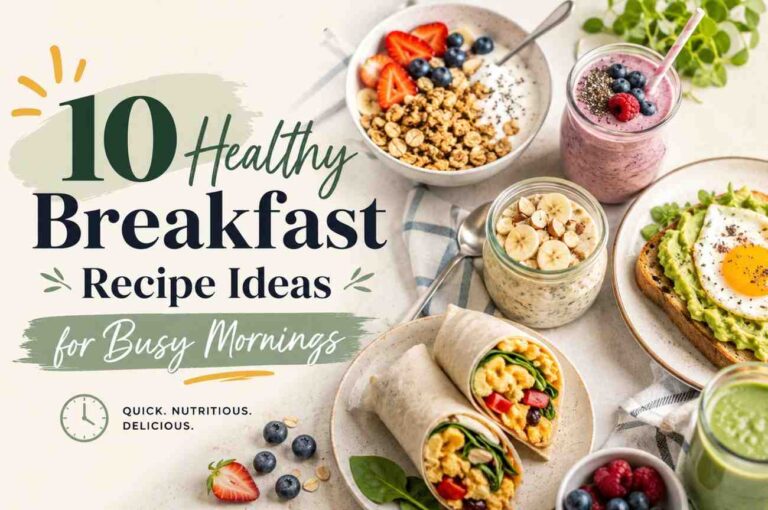

What Is the Healthiest Meal for Breakfast?The Complete 2026 Guide
What Is the Healthiest Meal for Breakfast?The Complete 2026 Guide
ou wake up. It’s 7:14 AM. You’ve got 20 minutes before the school run or the commute. You open the cabinet, stare at the sugary cereal box you bought “just in case,” and wonder — again — if there’s something better you should be eating.
Sound familiar? Most of us have been there. We know breakfast is important, but between the conflicting advice, the time pressure, and the endless scroll of wellness content, figuring out what to actually eat in the morning can feel overwhelming.
Here’s the thing: the healthiest breakfast doesn’t have to be elaborate, expensive, or Instagram-worthy. It doesn’t require soaking chia seeds overnight or blending a 12-ingredient smoothie. What it does require is a bit of balance — the right mix of protein, fiber, and healthy fats that will keep you full, focused, and energized until lunchtime (and beyond).
In this guide, we’re going to break down exactly what the research says, what cardiologists recommend, and what people around the world have been eating for centuries that keeps them thriving. Plus, we’ll give you real, practical, quick options that work on a Tuesday morning — not just a Sunday when you have two hours to spare.
Let’s dig in.
⭐ Featured Snippet Answer
The healthiest breakfast combines lean protein, dietary fiber, and healthy fats to stabilize blood sugar, support energy, and keep you satisfied. Top options include eggs with vegetables, Greek yogurt with berries, oatmeal with nuts and seeds, avocado toast on whole grain bread, and fruit smoothies with added protein. Aim for at least 20–30g of protein and 5–10g of fiber at breakfast.
What Is the Healthiest Meal for Breakfast?
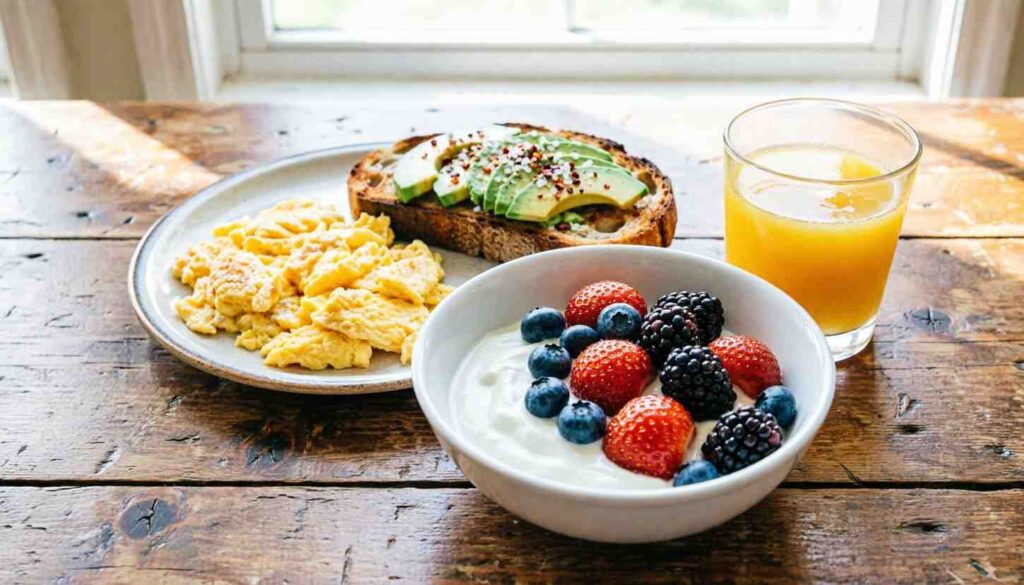
If you searched for this question hoping for a single definitive answer — one perfect breakfast that beats all others — we have to be honest: it doesn’t quite work that way. The healthiest breakfast for you depends on your age, goals, activity level, and health conditions. But research does point strongly toward a few key principles.
A truly healthy breakfast should do three things: stabilize your blood sugar, provide lasting energy, and keep you full until your next meal. That means hitting all three macronutrient bases — protein, fiber-rich carbohydrates, and healthy fats.
Think of it like building a small, nourishing tower. Protein is the foundation. Fiber keeps things moving (literally and metabolically). Healthy fats help absorb fat-soluble vitamins and keep hunger at bay. When all three are present, breakfast becomes something genuinely powerful rather than just a habit.
Key Principles of a Nutritious Breakfast
- Protein (20–30g): Reduces hunger hormones and preserves muscle mass
- Fiber (5–10g): Slows digestion, steadies blood sugar, feeds gut bacteria
- Healthy fats: Avocado, nuts, olive oil — support brain function and vitamin absorption
- Micronutrients: Vitamins, minerals, and antioxidants from colorful whole foods
- Low added sugar: Avoid the crash that follows a sugar spike
| Breakfast | Main Benefits | Protein Level |
|---|---|---|
| Eggs with sautéed vegetables | High protein, B vitamins, choline, satiety | ⭐⭐⭐⭐⭐ High |
| Greek yogurt bowl with berries | Probiotics, calcium, antioxidants, protein | ⭐⭐⭐⭐ High |
| Oatmeal with berries & nuts | Soluble fiber, heart health, slow energy release | ⭐⭐⭐ Moderate |
| Avocado toast on whole grain | Healthy fats, fiber, B vitamins | ⭐⭐ Low–Moderate |
| Protein smoothie | Customizable, quick, nutrient-dense | ⭐⭐⭐⭐ High (with protein powder) |
| Cottage cheese with fruit | High protein, calcium, gut-friendly | ⭐⭐⭐⭐⭐ Very High |
💡 Nutrition Tip
If you can only focus on one thing, focus on protein. Studies consistently show that a high-protein breakfast reduces calorie intake for the rest of the day and reduces cravings — especially for sugary snacks in the afternoon.
What Do Cardiologists Say to Eat for Breakfast?
When it comes to heart health, breakfast matters more than most people realize. Cardiologists consistently point to the same morning eating patterns that appear in the longest-lived, heart-healthiest populations around the world.
The message is fairly consistent: eat more fiber, more plants, more healthy fats, and less ultra-processed food. That means trading the sugary granola bar and the flavored latte for something with a bit more nutritional substance.
Here’s what leading heart doctors often recommend:
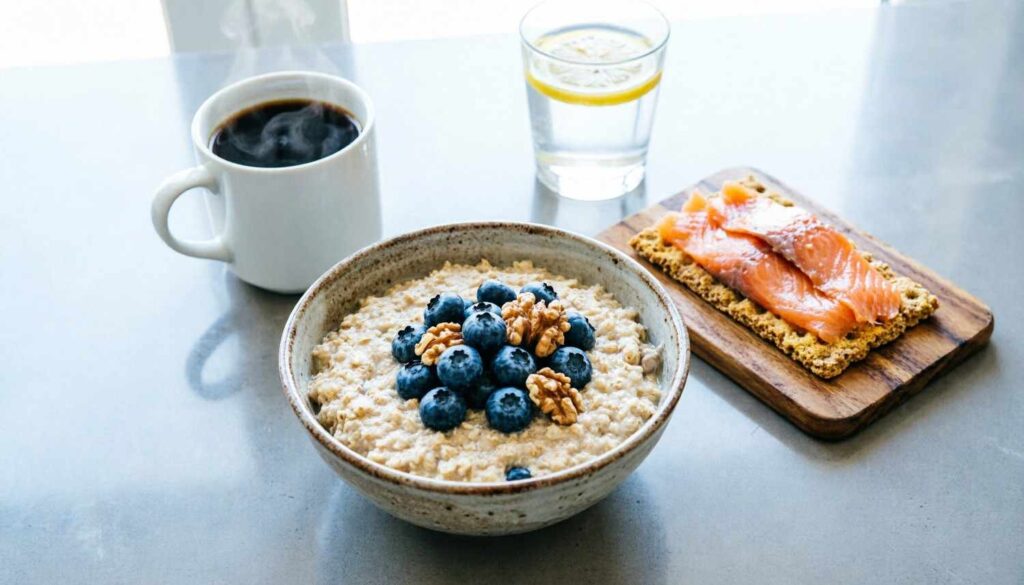
- Oats and whole grains — beta-glucan fiber in oats has been shown to lower LDL (“bad”) cholesterol
- Berries — blueberries, strawberries, and raspberries are rich in flavonoids that support arterial health
- Nuts and seeds — walnuts, flaxseed, and chia seeds provide omega-3 fatty acids and fiber
- Olive oil — even a drizzle on toast or eggs provides potent anti-inflammatory monounsaturated fats
- Eggs in moderation — the research has largely cleared eggs for most healthy adults; the key is what you cook them with
- Salmon or sardines — if you can stomach it in the morning, the omega-3s are extraordinary for heart health
- Avocado — heart-healthy monounsaturated fats and potassium for blood pressure support
| Heart-Healthy Food | Why It Helps Your Heart | Easy Breakfast Idea |
|---|---|---|
| Rolled oats | Beta-glucan lowers LDL cholesterol | Overnight oats with berries |
| Blueberries | Flavonoids reduce arterial stiffness | Add to yogurt or oatmeal |
| Walnuts | Omega-3s reduce inflammation | Sprinkle on yogurt or oats |
| Flaxseed (ground) | ALA omega-3s, fiber, lignans | Stir into oatmeal or smoothie |
| Avocado | Monounsaturated fats lower LDL | Avocado toast on whole grain |
| Eggs (2 per day) | High-quality protein, choline | Poached, boiled, or scrambled |
| Smoked salmon | Omega-3s, anti-inflammatory | On whole grain toast with avocado |
❤️ Cardiologist Note
The biggest breakfast mistake from a heart health perspective isn’t eating eggs — it’s the highly processed, high-sodium, high-sugar breakfast foods that most people default to. Bacon, pastries, flavored oatmeal packets, and sweet cereals are the real concerns.
What Is the #1 Healthiest Food in the World?
Every few years, a new superfood headlines the wellness world. Kale! Acai! Spirulina! Moringa! And while these foods absolutely have merit, the idea that there’s a single “number one” healthiest food is — well — mostly a marketing concept.
Nutritional scientists tend to agree: no single food provides everything the human body needs. Health comes from patterns of eating, not individual superfoods.
That said, some foods consistently appear at the top of nutrient density rankings. These are worth knowing about:
- Leafy greens (spinach, kale): Exceptionally high in vitamins K, A, C, folate, and iron with almost no calories
- Berries: Some of the highest antioxidant loads of any food, plus fiber and vitamin C
- Wild-caught salmon: Omega-3s, vitamin D, B12, and complete protein in one package
- Eggs: Called “nature’s multivitamin” by many nutritionists — complete protein, choline, B vitamins, lutein
- Legumes (beans, lentils): Fiber, plant protein, folate, iron — all in a cheap and versatile package
- Nuts (especially walnuts): Healthy fats, vitamin E, magnesium, and anti-inflammatory compounds
- Greek yogurt: Protein, probiotics, calcium, and B vitamins — a morning powerhouse
🌟 The Real Answer
If you want to build the healthiest breakfast (and diet) possible, don’t chase a single superfood. Instead, eat a wide variety of whole, minimally processed foods from across these categories. Diversity is the real secret to nutritional adequacy.
What Are Some Quick Healthy Breakfasts?
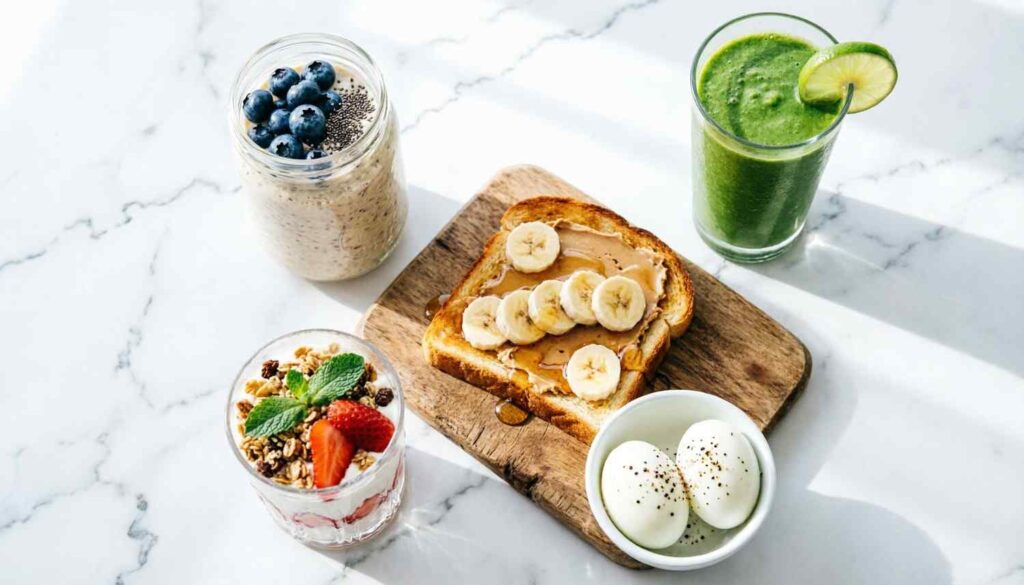
Let’s be honest — most mornings, you don’t have 45 minutes to craft a nourishing breakfast spread. You need something fast, filling, and actually good. The good news is that some of the healthiest breakfasts are also the quickest.
These are tried-and-tested options that take five minutes or less (or are prepped the night before):
- Overnight oats — 5 minutes prep the night before; grab-and-go in the morning
- Greek yogurt bowl — spoon into a bowl, top with berries and granola, done in 90 seconds
- Peanut butter on whole grain toast — 3 minutes, filling, and genuinely nutritious
- Hard-boiled eggs (batch-cooked) — cook 6 on Sunday, eat 2 each morning all week
- Smoothie with protein powder — 3 minutes if your ingredients are prepped; protein, fiber, and micronutrients in one cup
- Cottage cheese with fruit — scoop and slice, ready in 2 minutes; over 25g protein per cup
- Whole grain wrap with egg and avocado — microwave scrambled eggs in 90 seconds, wrap and go
| Quick Breakfast | Prep Time | Best For |
|---|---|---|
| Overnight oats | 5 min (night before) | Meal preppers, busy commuters |
| Greek yogurt bowl | 2 min | High protein seekers |
| Peanut butter toast | 3 min | Quick energy before a workout |
| Hard-boiled eggs | 0 min (pre-cooked) | Portable, high-protein snack |
| Protein smoothie | 3–5 min | Post-workout, weight loss |
| Cottage cheese + fruit | 2 min | High protein, low calorie goals |
| Whole grain egg wrap | 5 min | Satisfying, on-the-go breakfast |
Is It Better to Skip Breakfast?
This is probably the most hotly debated breakfast question of the last decade, thanks in large part to the rise of intermittent fasting. And the honest answer? It depends entirely on the person.
For decades, we were told that breakfast is the most important meal of the day. More recently, research on time-restricted eating and intermittent fasting (specifically the 16:8 protocol, where you eat only between, say, 10 AM and 6 PM) has suggested that skipping breakfast might offer metabolic benefits for some people.
Here’s a balanced breakdown:
Reasons Eating Breakfast Might Be Right for You
- You wake up genuinely hungry and energy-depleted
- You have early morning exercise or a physically demanding job
- You tend to overeat later in the day when you skip breakfast
- You have blood sugar conditions (like diabetes or hypoglycemia) where skipping can cause issues
- You’re a growing child, teenager, or pregnant
Reasons Skipping Breakfast Might Work for You
- You genuinely aren’t hungry in the morning and force-feeding yourself causes discomfort
- You’re practicing a medically supervised intermittent fasting protocol
- Your first meal of the day is nutritionally complete and satisfying
- You sleep well, feel energized, and aren’t compensating with sugar later
🧭 The Takeaway
Skipping breakfast isn’t inherently bad. But using “intermittent fasting” as an excuse to skip breakfast and then eat a massive ultra-processed lunch is unlikely to help your health goals. Listen to your body, and if you do eat breakfast, make it count.
What Is Considered the Healthiest Breakfast in the World?

If you look at the world’s Blue Zones — the five regions where people consistently live past 100 — and the cultures with the lowest rates of heart disease and chronic illness, their breakfasts share some fascinating common threads.
The Mediterranean Breakfast
In Greece, Turkey, and southern Italy, a traditional morning meal might include whole grain bread drizzled with olive oil, tomatoes, olives, a soft-boiled egg, and perhaps some cheese or yogurt. It’s minimally processed, rich in healthy fats, protein, and fiber — and remarkably satisfying.
The Japanese Breakfast
A traditional Japanese breakfast is perhaps the most nutritionally complete in the world: miso soup (fermented, probiotic-rich), steamed rice, grilled salmon or mackerel, pickled vegetables, and green tea. It covers protein, omega-3s, probiotics, fiber, and antioxidants in a single meal.
The Nordic Breakfast
Scandinavian countries consistently rank among the healthiest in the world. Their breakfast staples — rye crispbread, smoked fish, cottage cheese, and fermented dairy — are high in fiber, omega-3s, and protein, with very little added sugar.
What all three share: whole, minimally processed foods; healthy fats; fermented components; protein; and very little added sugar. That’s the template worth borrowing, regardless of your food culture.
Is Peanut Butter Heart-Healthy?
Yes — with some important caveats. Peanut butter has gotten a complicated reputation, largely because many popular brands are loaded with added sugar, hydrogenated oils, and salt. But natural peanut butter (ingredients: peanuts, maybe salt) is a genuinely nutritious food.
Here’s what it offers:
- Monounsaturated fats — the same type found in olive oil and avocado, associated with lower LDL cholesterol
- Protein — about 7–8g per two tablespoons
- Magnesium — supports heart rhythm, blood sugar regulation, and sleep
- Vitamin E — a fat-soluble antioxidant that supports arterial health
- Niacin (B3) — helps raise HDL (“good”) cholesterol
The key is portion awareness. Two tablespoons (about 32g) is a serving. It’s around 190 calories — satisfying and nutrient-dense when paired with a banana, whole grain toast, or apple slices. It becomes less healthy when you’re spooning it by the half-cup from the jar at midnight.
| Peanut Butter Type | Better Choice? | Why |
|---|---|---|
| Natural (peanuts only) | ✅ Yes — best choice | No added sugar or hydrogenated oils |
| Natural with salt | ✅ Good choice | Minimal sodium, still whole food |
| Regular (e.g. Skippy, Jif) | ⚠️ Okay in moderation | Contains added sugar and oils |
| “Reduced fat” peanut butter | ❌ Avoid | Fat replaced with extra sugar and starch |
| Peanut butter spreads / flavored | ❌ Avoid | High sugar, artificial ingredients |
Are Eggs a Healthy Breakfast?
If you look at the world’s Blue Zones — the five regions where people consistently live past 100 — and the cultures with the lowest rates of heart disease and chronic illness, their breakfasts share some fascinating common threads.
The Mediterranean Breakfast
In Greece, Turkey, and southern Italy, a traditional morning meal might include whole grain bread drizzled with olive oil, tomatoes, olives, a soft-boiled egg, and perhaps some cheese or yogurt. It’s minimally processed, rich in healthy fats, protein, and fiber — and remarkably satisfying.
The Japanese Breakfast
A traditional Japanese breakfast is perhaps the most nutritionally complete in the world: miso soup (fermented, probiotic-rich), steamed rice, grilled salmon or mackerel, pickled vegetables, and green tea. It covers protein, omega-3s, probiotics, fiber, and antioxidants in a single meal.
The Nordic Breakfast
Scandinavian countries consistently rank among the healthiest in the world. Their breakfast staples — rye crispbread, smoked fish, cottage cheese, and fermented dairy — are high in fiber, omega-3s, and protein, with very little added sugar.
What all three share: whole, minimally processed foods; healthy fats; fermented components; protein; and very little added sugar. That’s the template worth borrowing, regardless of your food culture.
Is Peanut Butter Heart-Healthy?
Yes — with some important caveats. Peanut butter has gotten a complicated reputation, largely because many popular brands are loaded with added sugar, hydrogenated oils, and salt. But natural peanut butter (ingredients: peanuts, maybe salt) is a genuinely nutritious food.
Here’s what it offers:
- Monounsaturated fats — the same type found in olive oil and avocado, associated with lower LDL cholesterol
- Protein — about 7–8g per two tablespoons
- Magnesium — supports heart rhythm, blood sugar regulation, and sleep
- Vitamin E — a fat-soluble antioxidant that supports arterial health
- Niacin (B3) — helps raise HDL (“good”) cholesterol
The key is portion awareness. Two tablespoons (about 32g) is a serving. It’s around 190 calories — satisfying and nutrient-dense when paired with a banana, whole grain toast, or apple slices. It becomes less healthy when you’re spooning it by the half-cup from the jar at midnight.
| Peanut Butter Type | Better Choice? | Why |
|---|---|---|
| Natural (peanuts only) | ✅ Yes — best choice | No added sugar or hydrogenated oils |
| Natural with salt | ✅ Good choice | Minimal sodium, still whole food |
| Regular (e.g. Skippy, Jif) | ⚠️ Okay in moderation | Contains added sugar and oils |
| “Reduced fat” peanut butter | ❌ Avoid | Fat replaced with extra sugar and starch |
| Peanut butter spreads / flavored | ❌ Avoid | High sugar, artificial ingredients |
Are Eggs a Healthy Breakfast?
After decades of confusion — driven largely by studies that have since been revisited and reinterpreted — the scientific consensus has largely come back in favor of eggs. Yes, they contain dietary cholesterol. No, that doesn’t automatically translate into higher blood cholesterol for most people.
Here’s what eggs actually bring to the table:
- Complete protein: All nine essential amino acids in a highly bioavailable form
- Choline: A critical nutrient for brain health, liver function, and fetal development — most people don’t get enough
- Lutein and zeaxanthin: Antioxidants that protect eye health and are associated with reduced risk of macular degeneration
- Vitamins B12 and D: Both commonly deficient in modern diets
- Healthy fats: Including omega-3s if you choose pasture-raised or omega-3-enriched eggs
- Satiety: A high-protein breakfast like eggs consistently reduces appetite for hours
The American Heart Association and most major nutrition bodies now say that up to two eggs per day is fine for healthy adults. The real concern isn’t the egg — it’s the bacon, butter, and white toast that often accompany it.
🥚 Quick Egg Tip
Scramble eggs with spinach and tomatoes. Add half an avocado on the side. You’ve just built a breakfast with complete protein, healthy fats, fiber, folate, vitamin C, and over a dozen essential micronutrients. Under 10 minutes. Under 400 calories.
What Is a High Protein Breakfast Food?
Protein at breakfast is the single most impactful change most people can make to their morning nutrition. It reduces hunger hormones (ghrelin), increases fullness hormones (PYY), supports muscle maintenance, stabilizes blood sugar, and reduces the likelihood of reaching for a cookie at 10:30 AM.
Aim for 20–35 grams of protein at breakfast for optimal satiety and metabolic benefits. Here’s how to get there:
| High-Protein Food | Protein per Serving | Easy Breakfast Use |
|---|---|---|
| Eggs (2 large) | ~13g | Scrambled, poached, boiled |
| Greek yogurt (1 cup) | ~17–20g | Bowl with berries & granola |
| Cottage cheese (½ cup) | ~14g | With fruit, or on toast |
| Smoked salmon (3 oz) | ~16g | On whole grain toast or bagel |
| Protein powder (1 scoop) | ~20–25g | In smoothies or oatmeal |
| Edamame (½ cup) | ~9g | Side dish or mixed into bowls |
| Turkey breast (2 oz) | ~14g | In wraps or alongside eggs |
| Tofu (firm, ½ cup) | ~10g | Scrambled tofu with vegetables |
| Tempeh (2 oz) | ~11g | Sliced, pan-fried, in wraps |
| Lentils (½ cup cooked) | ~9g | Lentil bowls or on toast |
Best Foods to Add to a Healthy Breakfast
Think of these as your breakfast building blocks — foods that punch above their weight nutritionally and can be mixed and matched with almost anything:
- Berries — blueberries, strawberries, raspberries: top-tier antioxidants, low sugar, high fiber
- Oats — especially steel-cut or rolled; rich in beta-glucan fiber and slow-release energy
- Chia seeds — omega-3s, fiber, calcium; swells in liquid to create satisfying texture
- Ground flaxseed — omega-3 ALA, lignans, fiber; add to anything
- Spinach — mild flavor, iron, folate, vitamin K; disappears in a smoothie or scramble
- Avocado — monounsaturated fats, potassium, fiber, B vitamins
- Greek yogurt — protein, probiotics, calcium; the most versatile breakfast base
- Walnuts — omega-3s, vitamin E, magnesium; a handful changes any meal
- Whole grain bread — fiber, B vitamins, complex carbohydrates; the right foundation for toast
Common Breakfast Mistakes (And What to Do Instead)
You may be eating breakfast every morning and still wondering why you’re hungry by 10 AM, crashing by noon, or struggling with energy. Often it comes down to a few very common mistakes.
- Eating sugary cereals as a “healthy” option
Most breakfast cereals — even ones marketed with health claims — are ultra-processed and spike blood sugar rapidly. Replace with: oatmeal, unsweetened muesli, or eggs. - Very low protein intake
Toast and juice is not a breakfast that will keep you full. Aim for at least 20g of protein. Replace with: add eggs, yogurt, or cottage cheese to any breakfast. - Skipping fiber entirely
Fiber is what slows digestion and keeps you full. Protein alone won’t cut it. Add: berries, oats, chia seeds, or vegetables to every breakfast. - Drinking your calories in liquid sugar
Flavored coffee drinks, fruit juice, and bottled smoothies often contain 30–50g of sugar. Switch to: black coffee, plain tea, water, or homemade smoothies with no added sugar. - Eating too little overall
An underpowered breakfast sets you up for overeating at lunch. A 300–500 calorie breakfast with adequate protein and fiber is appropriate for most adults. - Relying on granola bars as a “meal”
Most granola bars are essentially candy with oat flour. Check the label — if sugar is in the top three ingredients, it’s a dessert, not breakfast.
Easy 7-Day Healthy Breakfast Plan
Here’s a week of breakfasts that are realistic, nutritionally balanced, and (crucially) actually delicious. These are real meals, not diet punishment.
| Day | Breakfast | Prep Time | Approx. Protein |
|---|---|---|---|
| Monday | Scrambled eggs (2) with spinach + whole grain toast + berries | 10 min | ~22g |
| Tuesday | Overnight oats with chia seeds, almond butter & banana (prepped Sunday) | 0 min (grab & go) | ~14g |
| Wednesday | Greek yogurt parfait with granola, blueberries & honey | 3 min | ~18g |
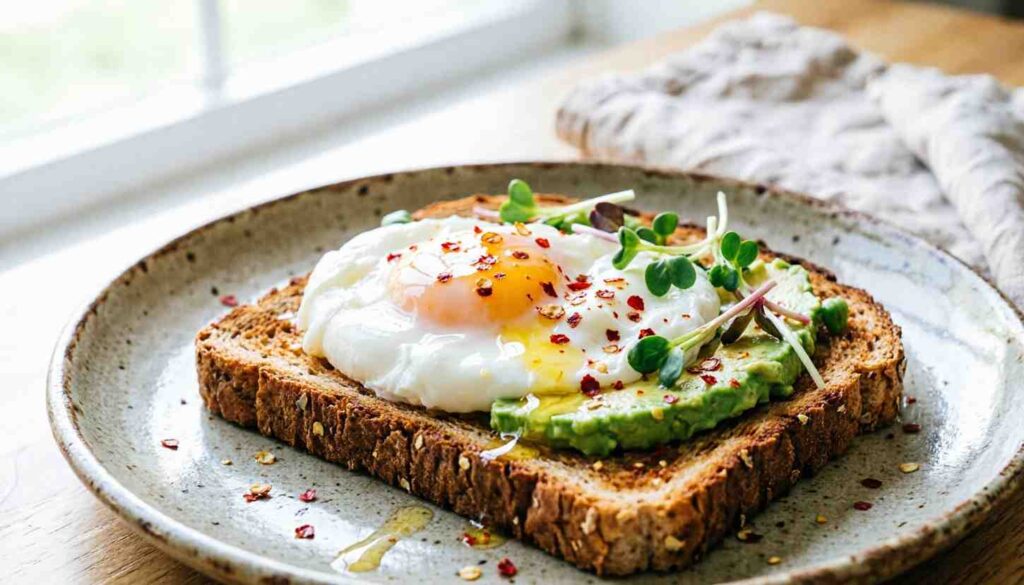
| Thursday | Avocado toast on sourdough + 2 poached eggs + cherry tomatoes | 12 min | ~20g |
| Friday | Protein smoothie: banana, spinach, Greek yogurt, almond milk, protein powder | 5 min | ~30g |
| Saturday | Smoked salmon on rye with cream cheese, cucumber & capers + green tea | 5 min | ~20g |
| Sunday | Veggie omelette (3 eggs) with peppers, mushrooms & feta + fresh fruit salad | 15 min | ~25g |
🗓️ Meal Prep Tip
On Sunday, batch-cook 6 hard-boiled eggs, prep overnight oats for Tuesday, and wash/portion your berries. That’s about 20 minutes of work that makes every weekday breakfast faster and healthier.
Frequently Asked Questions
What is the healthiest breakfast for weight loss?
The most effective weight-loss breakfast is high in protein (20–30g) and fiber (5–10g), with moderate healthy fats and minimal added sugar. Top options: Greek yogurt with berries, eggs with vegetables, or cottage cheese with fruit. Protein reduces hunger hormones and helps prevent overeating later in the day.
What breakfast keeps you full the longest?
High-protein breakfasts consistently win in satiety studies. Eggs, cottage cheese, and Greek yogurt typically keep people full for 3–5 hours. Adding fiber (oats, chia seeds, berries) and healthy fats extends this further. A combination like eggs + oatmeal + nuts can keep hunger at bay for 4–6 hours.
Is oatmeal healthy every day?
Yes, oatmeal is genuinely excellent to eat daily — provided you choose the right kind and don’t drown it in sugar. Steel-cut or rolled oats are rich in beta-glucan fiber, which lowers LDL cholesterol and feeds beneficial gut bacteria. Avoid instant flavored oatmeal packets, which often contain 12+ grams of added sugar per serving.
Are smoothies healthy for breakfast?
Homemade smoothies can be very healthy — especially when they include protein (Greek yogurt, protein powder), leafy greens (spinach), fiber (chia seeds, flaxseed), and fruit. The risk is overcloading on fruit sugar without protein or fat, which can spike and crash blood sugar. Avoid store-bought smoothies, which are often high in sugar with minimal nutrition.
What should I avoid eating in the morning?
Avoid foods high in added sugar and low in protein: sweetened cereals, flavored yogurt with lots of sugar, fruit juices, flavored coffee drinks, most granola bars, white bread with jam, and pastries. These cause blood sugar spikes followed by crashes, leaving you tired and hungry within an hour.
Is coffee okay with breakfast?
Black coffee is perfectly fine with breakfast and may actually enhance the metabolic benefits of morning exercise. The concern is what goes in the coffee: cream and sugar can add 200–400 calories of mostly fat and sugar. If you enjoy coffee, drink it — just try to keep it relatively simple and pair it with an actual meal rather than using it as a meal replacement.
Final Thoughts: Progress Over Perfection
Here’s the truth that no wellness article wants to say out loud: there is no perfect breakfast. There’s no single food or combination of foods that will solve all your health problems, guarantee weight loss, or protect you from every disease.
What there is, though, is a consistent pattern of small, reasonable choices that compound over months and years into genuinely better health. Choosing eggs over sugary cereal three mornings this week. Adding a handful of spinach to a smoothie. Swapping the flavored latte for a plain one and pairing it with Greek yogurt. These are not dramatic transformations. They’re small shifts that snowball.
The healthiest people in the world — the ones living well into their 90s and 100s in places like Sardinia, Okinawa, and Ikaria — aren’t eating perfect diets. They’re eating mostly whole foods, enjoying meals socially, moving their bodies gently, and sleeping well. Breakfast is one piece of a much bigger picture.
Start where you are. Use what you have. Make one small improvement this week. That’s not a compromise — that’s actually how sustainable health is built.
You’ve got this.
🌿 More Healthy Morning Inspiration
Looking for more realistic breakfast ideas and easy healthy recipes? Explore simple wellness meals and healthy breakfast inspiration on Best Carb Recipes — recipes that actually work for real mornings .https://www.bestcarbrecipes.com/

Food lover and creator of BestCarbRecipes, sharing easy recipes, low-carb meal ideas, healthy cooking inspiration, calorie-friendly tips, and practical food guides to make everyday eating simpler, healthier, and more delicious.