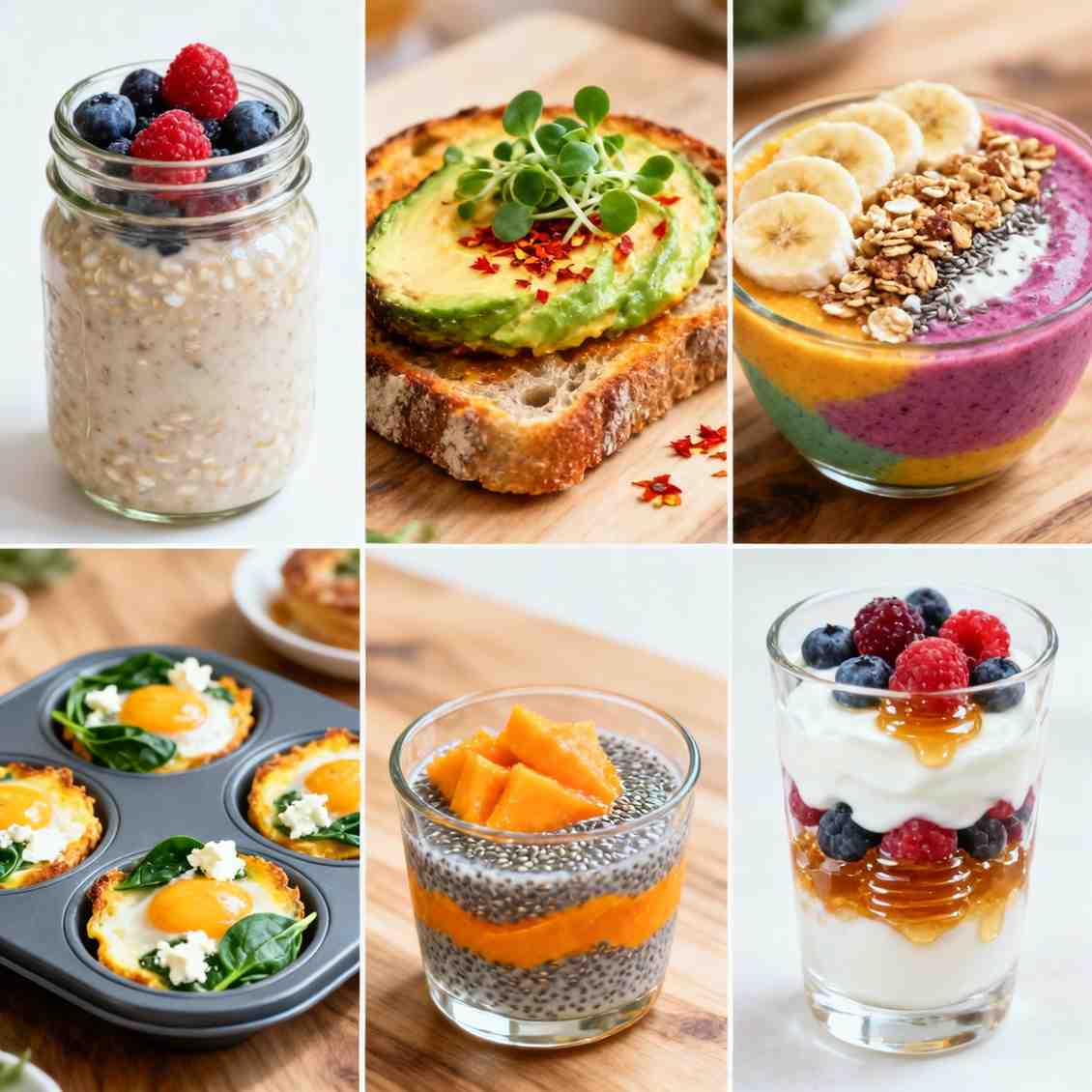
What Is the Healthiest Thing to Make for Breakfast? 25 Healthy Breakfast Ideas for Weight Loss & Energy
“Tell me what you eat in the morning, and I’ll tell you how the rest of your day will go.” — adapted from the wisdom of basically every nutritionist ever.
Raise your hand if you’ve ever skipped breakfast, grabbed a sad granola bar on the way out the door, or poured yourself a bowl of sugary cereal and told yourself it was “fine.” No judgment here — we’ve all been there. But here’s the thing: what you eat in the first hour of your morning sets the entire tone for your energy, focus, metabolism, and yes, your weight.
The healthiest breakfast isn’t about being perfect. It’s about choosing foods that actually fuel you — foods that stabilize blood sugar, keep you satisfied, and give your body what it needs to thrive. Whether your goal is to lose a few pounds, have more energy by noon, or just stop reaching for that second (okay, third) cup of coffee, this guide is for you.
Below, you’ll find everything from the top five healthiest breakfast foods, cardiologist-approved picks, quick healthy breakfasts for chaotic mornings, and a full list of 25 healthy breakfast ideas complete with calories and benefits. Let’s dig in.
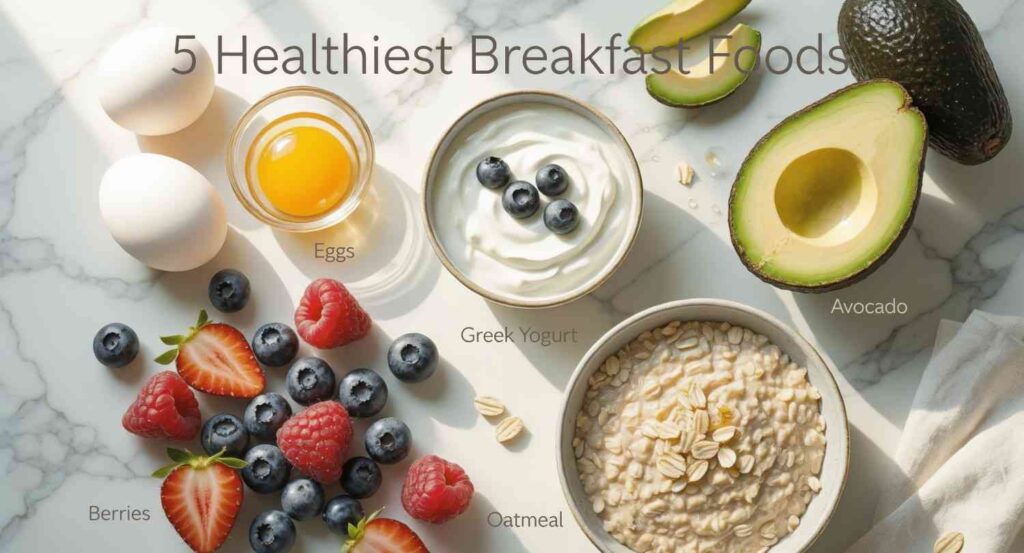
What Are the 5 Healthiest Breakfast Foods?
If you could only stock your kitchen with five ingredients every single week, these would be the ones. They’re backed by research, loved by dietitians, and — most importantly — they actually taste good.
1. Eggs 🥚
Eggs are the gold standard of high protein breakfast foods, and for very good reason. One large egg gives you about 6 grams of protein, B vitamins, choline for brain health, and a surprisingly decent dose of vitamin D. They keep you full for hours, which means less snacking before lunch. Scrambled, poached, soft-boiled, baked in a muffin tin — eggs are endlessly versatile and genuinely one of the best breakfast foods on the planet.
2. Oatmeal 🌾
If there’s one food that nutritionists across the board agree on, it’s oats. Oatmeal is loaded with beta-glucan, a soluble fiber that slows digestion, lowers cholesterol, and keeps blood sugar steady. It’s also a fantastic source of complex carbohydrates, giving you slow, sustained energy instead of a spike-and-crash cycle. Go for rolled or steel-cut oats over instant packets (which are often loaded with sugar).
3. Greek Yogurt 🫙
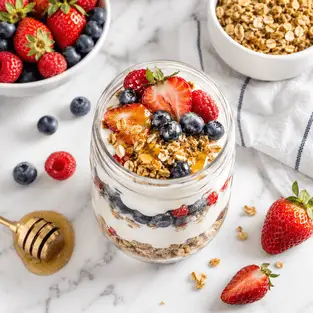
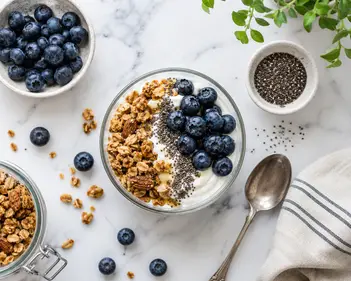
Greek yogurt is basically a superfood in a cup. It has about twice the protein of regular yogurt — usually around 15–20 grams per serving — plus probiotics for gut health, calcium for bones, and a thick creamy texture that genuinely feels indulgent. Top it with berries and a drizzle of honey and you’ve got yourself a breakfast that tastes like dessert but acts like a nutritionist’s dream.
4. Berries 🫐
Blueberries, strawberries, raspberries, blackberries — they’re all nutritional powerhouses packed with antioxidants, fiber, and vitamin C, with relatively low sugar compared to other fruits. Research has consistently linked berry consumption to better cognitive function, reduced inflammation, and improved heart health. Add them to your oatmeal, yogurt, or smoothie, or just eat a handful straight from the fridge.
5. Avocados 🥑
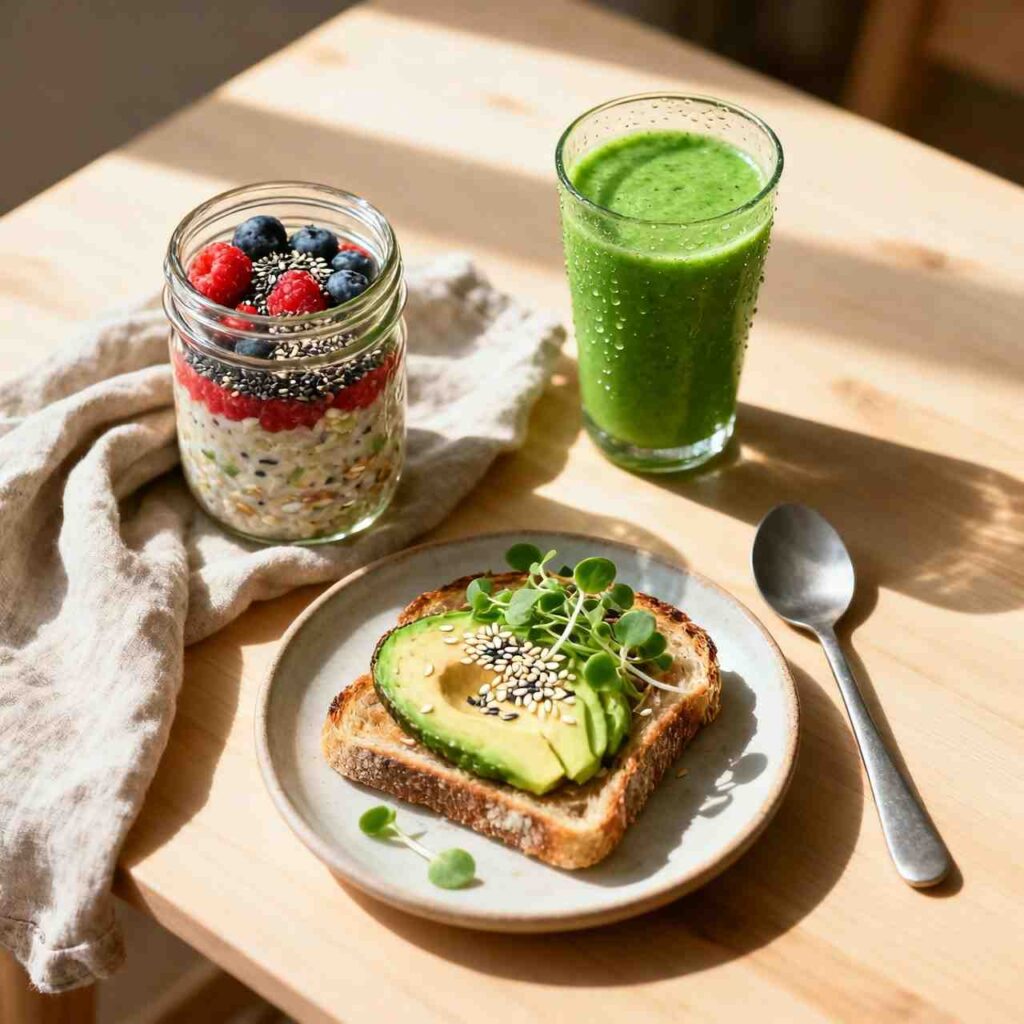
Avocados bring healthy fats — specifically monounsaturated fats — to your morning table. These fats keep you full, support heart health, help your body absorb fat-soluble vitamins, and give your brain the fuel it needs to focus. Half an avocado on whole-grain toast with a sprinkle of sea salt is one of the most satisfying, nutrient-dense quick healthy breakfast options out there.
What Do Cardiologists Recommend for Breakfast?
Your heart starts working the moment you wake up. What you feed it in the morning matters more than most people realize. Cardiologists and heart health specialists consistently point to a few key principles when it comes to building the healthiest breakfast for cardiovascular wellness.
- Load up on fiber. Soluble fiber from oats, flaxseeds, beans, and fruit helps lower LDL (“bad”) cholesterol. Aim for at least 5–10 grams of fiber at breakfast.
- Choose whole grains over refined ones. Whole grain toast, oatmeal, and quinoa are excellent choices. White bread, pastries, and most breakfast cereals? Not so much.
- Embrace healthy fats. Avocado, walnuts, chia seeds, and olive oil drizzled on toast support heart function. Saturated fat-heavy breakfasts (think: sausage and cheese daily) increase cardiovascular risk over time.
- Keep sugar low — especially added sugar. High-sugar breakfasts spike insulin and promote inflammation. Skip the flavored yogurts, pastries, and sugary granola bars.
- Add omega-3 sources. Chia seeds, flaxseeds, and walnuts are loaded with omega-3 fatty acids, which actively reduce inflammation and support healthy blood pressure.
- Include plant-based protein. Legumes, nuts, seeds, and soy-based foods give you protein without the saturated fat of some animal products.
The bottom line from the cardiology world: think colorful, fiber-rich, and minimally processed. A bowl of oatmeal topped with walnuts, blueberries, and a drizzle of almond butter is essentially a cardiologist’s dream breakfast.
Best Breakfast for Weight Loss
Here’s what nobody tells you about breakfast for weight loss: it’s not really about eating as little as possible in the morning. In fact, skimping on breakfast often backfires — leaving you ravenously hungry by 10am and reaching for whatever’s closest (hello, office donuts).
The smartest approach is to build a breakfast that checks three boxes: high protein, high fiber, and moderate healthy fat. This combination is scientifically proven to reduce appetite hormones, stabilize blood sugar, and keep you in a calorie deficit without feeling deprived.
High-Protein Morning Meals
Protein is the superstar nutrient for weight loss. Studies show that eating 25–30 grams of protein at breakfast can significantly reduce calorie intake throughout the rest of the day. Think eggs (especially egg whites if you’re watching fat), Greek yogurt, cottage cheese, protein smoothies, or smoked salmon on whole-grain toast.
Low-Calorie Breakfast Ideas That Still Fill You Up
You don’t need to eat 700 calories to feel full — you need the right 350–450 calories. Egg white omelettes with spinach, tomato, and feta come in around 250 calories and will keep you satisfied for three to four hours. A smoothie bowl with protein powder, frozen berries, and chia seeds can be as low as 300 calories with 20+ grams of protein.
Foods That Keep You Full Longer
Satiety is everything when you’re trying to eat less. The following foods are particularly effective at keeping hunger at bay:
- Eggs (protein + fat combo = sustained fullness)
- Oatmeal (beta-glucan fiber slows digestion)
- Chia seeds (expand in your stomach, incredibly filling)
- Cottage cheese (high protein, low calorie)
- Almonds and almond butter (healthy fats + protein)
Is It Better to Skip Breakfast?
This one is genuinely debated — and the answer isn’t as simple as either side would have you believe.
The case for skipping breakfast is largely tied to intermittent fasting (IF), particularly the 16:8 method where you eat within an eight-hour window. Some people genuinely do better this way. If you’re not hungry in the morning and you eat a nutritious first meal around noon, your body might respond very well to that pattern. Some research suggests IF can help with weight management, insulin sensitivity, and cellular repair processes.
The case for eating breakfast is also compelling. Multiple studies show that eating a nutritious morning meal is linked to better concentration, improved mood, higher metabolic rate throughout the day, and healthier food choices overall. Children and teenagers, in particular, show significantly better academic performance when they eat breakfast.
The honest answer? It depends on you. If you wake up hungry, eat. If you’re not hungry in the morning, don’t force it — but make sure your first meal of the day is genuinely nourishing. What clearly doesn’t work for anyone is skipping breakfast AND then making poor food choices later because you’re too hungry to care.
✅ Bottom Line on Skipping Breakfast
Listen to your body. Skipping is fine if you’re doing it intentionally and still meeting your nutritional needs during the day. But if you’re skipping breakfast and then binge-snacking by 11am, you’d probably be better off eating something balanced in the morning.
Quick Healthy Breakfast Ideas for Busy Mornings
Not everyone has 45 minutes to make a beautiful frittata on a Tuesday morning. Real life is rushed, messy, and full of school runs and work calls. Here are easy breakfast recipes and ideas you can pull together in five to ten minutes — or even prep the night before.
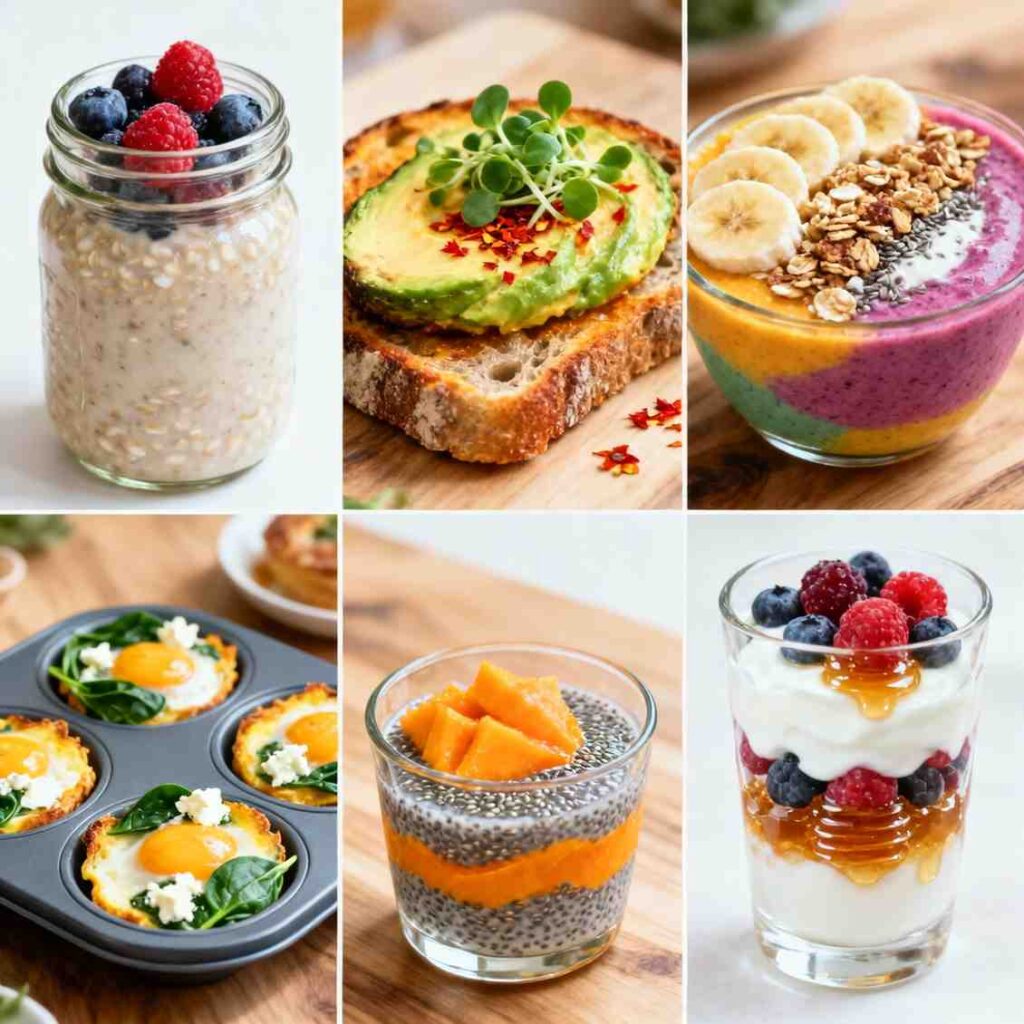
- Overnight oats — Mix oats, milk (or a plant-based alternative), chia seeds, and your favorite toppings in a jar the night before. Grab it from the fridge and go. Done.
- Greek yogurt parfait — Layer Greek yogurt, berries, and a sprinkle of granola. Five minutes, max.
- Avocado toast with a fried egg — Toasts while you slice. Fry the egg while you mash. Seriously quick and genuinely satisfying.
- Banana with almond butter — Grab a banana, grab a spoon of nut butter, done. It’s not glamorous, but it’s nutritious and fast.
- Smoothie with protein powder — Frozen berries, spinach, protein powder, almond milk. Blend for 60 seconds, drink in the car.
- Cottage cheese with fruit — High protein, zero cooking, endlessly customizable. Add a drizzle of honey and some sliced peaches.
- Hard-boiled eggs (prepped in bulk) — Boil six at once on Sunday. Grab two each morning with a piece of fruit. Easy, affordable, nourishing.
- Whole-grain toast with smoked salmon and cream cheese — Ready in three minutes. Tastes wildly fancy. High in omega-3s and protein.
- Chia pudding (made the night before) — Mix chia seeds with coconut milk and a splash of vanilla, refrigerate overnight. Top with mango in the morning.
- Egg muffins (batch-cooked) — Whisk eggs with veggies and cheese, pour into a muffin tin, bake on Sunday. Reheat in 45 seconds all week.
- Apple slices with peanut butter and hemp seeds — No cooking, no dishes, no excuses.
- Whole-grain cereal with unsweetened almond milk and fresh berries — Look for cereals with 5+ grams of fiber and under 6 grams of sugar per serving.
Foods That Are Good on an Empty Stomach
Not all foods to eat in the morning are created equal — especially when your stomach has been empty for 7–9 hours. Some foods gently wake up your digestive system; others shock it. Here’s what your gut actually loves as a first bite:
- Warm water with lemon — Before anything else, this gentle combo hydrates your body, supports liver function, and stimulates digestion. It’s a small habit with a surprisingly big impact.
- Bananas — Easy on the stomach, provide natural sugars for quick energy, and contain potassium and magnesium which are both depleted during sleep. A great first food if you’re exercising early.
- Oatmeal — Its soluble fiber creates a gentle, protective coating in the stomach and provides slow-release energy. Perfect if you have a sensitive stomach or suffer from acid reflux.
- Yogurt — The probiotics in yogurt (especially when eaten on an empty stomach) can populate the gut more effectively. Go for plain, unsweetened yogurt for maximum benefit.
- Nuts and seeds — A small handful of almonds, walnuts, or pumpkin seeds is gentle, nutrient-dense, and gives your body healthy fats and protein to ease into the day.
- Papaya — Contains the digestive enzyme papain, which actively helps break down food. Starting your morning with papaya is essentially giving your gut a head start.
- Watermelon — Hydrating (90% water), light, and full of lycopene. Excellent on an empty stomach, especially in warmer months.
25 Healthy Breakfast Ideas for Weight Loss & Energy
Here’s the full list — your new morning go-to guide. Each idea includes an approximate calorie count and what it does for your body.
- Classic Scrambled Eggs with Spinach & Whole-Grain ToastTwo scrambled eggs with wilted spinach, one slice whole-grain toast, a drizzle of olive oil. Simple, filling, and perfectly balanced. ~320 cal
Benefits: High protein, iron from spinach, complex carbs for sustained energy. - Overnight Oats with Berries & Chia SeedsRolled oats soaked overnight in almond milk with chia seeds, topped with fresh blueberries and a swirl of almond butter. ~380 cal
Benefits: Fiber-rich, antioxidants, heart-healthy omega-3s. - Greek Yogurt Parfait with Granola & StrawberriesPlain full-fat Greek yogurt layered with low-sugar granola, sliced strawberries, and a drizzle of honey. ~340 cal
Benefits: Probiotics, 20g+ protein, calcium, antioxidants. - Avocado Toast with Poached Egg & Everything Bagel SeasoningSmashed avocado on seeded whole-grain toast, topped with a perfectly poached egg and a sprinkle of seasoning. ~370 cal
Benefits: Healthy fats, protein, B vitamins, fiber. - Protein-Packed Green SmoothieSpinach, frozen banana, vanilla protein powder, almond milk, and a tablespoon of flaxseed. Blend until smooth and creamy. ~310 cal
Benefits: 25g+ protein, iron, omega-3s, digestive fiber. - Chia Pudding with Mango & CoconutChia seeds soaked overnight in coconut milk, topped with fresh diced mango and a sprinkle of toasted coconut flakes. ~280 cal
Benefits: Omega-3s, fiber, vitamin C, anti-inflammatory. - Veggie Egg Muffins (Batch-Cooked)Eggs whisked with bell pepper, onion, cherry tomatoes, and feta, baked in muffin tins. Make 12 on Sunday, eat all week. ~190 cal (3 muffins)
Benefits: High protein, low carb, meal-prep friendly. - Smoked Salmon on Rye with Cream Cheese & CapersTwo slices of dark rye bread, a smear of light cream cheese, wild smoked salmon, capers, and thin red onion slices. ~350 cal
Benefits: Omega-3 fatty acids, protein, gut-friendly fermented rye. - Banana Almond Butter Smoothie BowlBlended frozen banana and almond milk, poured thick into a bowl, topped with sliced almonds, banana, and cacao nibs. ~360 cal
Benefits: Potassium, healthy fats, antioxidant-rich cacao. - Cottage Cheese with Pineapple & Hemp SeedsA generous scoop of low-fat cottage cheese with fresh pineapple chunks, a tablespoon of hemp seeds, and a pinch of cinnamon. ~250 cal
Benefits: Very high protein (~28g), digestive enzymes from pineapple, complete amino acids from hemp. - Steel-Cut Oatmeal with Walnuts, Cinnamon & AppleSlow-cooked steel-cut oats topped with diced fresh apple, crushed walnuts, cinnamon, and a light drizzle of maple syrup. ~390 cal
Benefits: Heart-healthy, blood sugar stabilizing, anti-inflammatory walnuts. - Whole-Grain Waffles with Almond Butter & Fresh RaspberriesTwo whole-grain waffles (homemade or a clean-label frozen variety), topped with almond butter and a heap of fresh raspberries. ~400 cal
Benefits: Fiber, healthy fats, antioxidants — much better than syrup-drenched waffles. - Baked Oatmeal Cups with BlueberriesOats, egg, banana, almond milk, and blueberries mixed and baked in muffin cups. A portable, prep-ahead breakfast that feels like a treat. ~200 cal (2 cups)
Benefits: Fiber, antioxidants, natural sweetness without refined sugar. - Shakshuka (Eggs Poached in Tomato Sauce)A fragrant Middle Eastern classic: eggs poached in spiced tomato sauce with garlic and cumin. Serve with whole-grain pita. ~350 cal
Benefits: Lycopene from tomatoes, protein, anti-inflammatory spices. - Apple & Peanut Butter Rice CakesTwo brown rice cakes topped with natural peanut butter, thinly sliced apple, and a sprinkle of cinnamon. Zero cooking required. ~260 cal
Benefits: Quick energy, healthy fats, fiber, and incredibly easy to make. - Tofu Scramble with Turmeric & VegetablesCrumbled firm tofu sautéed with turmeric, bell peppers, mushrooms, and kale. A plant-based powerhouse breakfast. ~280 cal
Benefits: Plant protein (~22g), anti-inflammatory turmeric, iron, calcium. - Smashed Avocado & Tomato on SourdoughRipe avocado mashed on a thick slice of sourdough with halved cherry tomatoes, fresh basil, and a squeeze of lemon. ~330 cal
Benefits: Gut-friendly sourdough, monounsaturated fats, vitamin C, lycopene. - Warm Quinoa Breakfast Bowl with Berries & HoneyCooked quinoa (yes, for breakfast!) with warm almond milk, fresh berries, chopped almonds, and a drizzle of raw honey. ~350 cal
Benefits: Complete protein, all nine essential amino acids, magnesium, antioxidants. - Flaxseed & Banana Protein PancakesBlended banana, eggs, and flaxseed cooked into small pancakes. Top with fresh berries and a tiny drizzle of pure maple syrup. ~320 cal
Benefits: Omega-3s, high protein, naturally gluten-free if needed. - Matcha Latte with Almond Flour MuffinA ceremonial-grade matcha latte made with oat milk alongside a homemade almond flour muffin sweetened with dates. ~290 cal
Benefits: L-theanine for calm energy, antioxidants, lower caffeine than coffee. - Two-Ingredient Banana Oat PancakesJust one ripe banana mashed with two eggs. Cook in a non-stick pan. Serve with Greek yogurt and sliced kiwi on top. ~270 cal
Benefits: Naturally gluten-free, no added sugar, very quick, kid-friendly. - Seed & Nut Trail Mix with Fresh FruitA small handful of mixed seeds (pumpkin, sunflower, chia) and nuts (almonds, cashews) paired with a bowl of sliced seasonal fruit. ~310 cal
Benefits: Healthy fats, zinc, magnesium, vitamin C from fruit. Totally no-cook. - Whole-Grain Cereal with Unsweetened Almond Milk & RaspberriesA high-fiber cereal (choose one with 5g+ fiber, under 6g sugar) with cold almond milk and a generous handful of fresh raspberries. ~290 cal
Benefits: Fiber, iron, antioxidants. Ultra fast — pour and go. - Açaí Bowl with Banana, Coconut & Dark ChocolateBlended frozen açaí with almond milk, poured thick and topped with sliced banana, coconut flakes, cacao nibs, and granola. ~400 cal
Benefits: Incredible antioxidant profile, fiber, healthy fats, B vitamins. - Veggie-Loaded Breakfast Burrito (Whole-Wheat Wrap)A whole-wheat tortilla filled with scrambled eggs, black beans, sautéed peppers, avocado, salsa, and a pinch of cumin. ~430 cal
Benefits: High protein (~28g), fiber, complex carbs, healthy fats — a full meal in one wrap.
Common Breakfast Mistakes to Avoid
Even well-intentioned people sabotage their mornings without realizing it. Here are the most common missteps — and how to sidestep them.
- Eating too much sugar. Flavored yogurts, fruit juices, most granola bars, and “healthy” cereals are often sugar bombs in disguise. Read labels and look for hidden sugars like fructose corn syrup, dextrose, and cane sugar.
- Skipping protein entirely. A breakfast of just fruit or toast leaves you hungry within two hours. Always include a protein source — eggs, yogurt, nuts, or a protein powder.
- Drinking calories instead of eating them. A glass of orange juice has more sugar than a Coke. Smoothies made with multiple fruit servings, juice, and sweetened yogurt can easily top 500 calories with little protein or fiber. Make your smoothies strategically.
- Eating too fast. Your gut needs about 20 minutes to signal fullness to your brain. Slowing down — even just a little — helps you eat less and enjoy your food more.
- Choosing “low-fat” processed foods. When manufacturers remove fat, they usually replace it with sugar to maintain taste. Full-fat Greek yogurt, for example, is often a better choice than fat-free varieties loaded with added sugar.
- Relying on caffeine instead of food. Coffee can suppress appetite temporarily, but it doesn’t nourish you. If you’re consistently skipping breakfast and living on black coffee, your energy, mood, and metabolism will all suffer.
- Not drinking water first. After 7–9 hours without fluids, your body is mildly dehydrated when you wake up. A glass of water before your first meal improves digestion, alertness, and metabolic function.
Final Thoughts
Here’s the beautiful thing about building a healthier morning routine: you don’t have to do it all at once. You don’t need to wake up at 5am making elaborate grain bowls while sipping matcha in linen pajamas (unless that’s genuinely your vibe, in which case, we admire you).
Start with one swap. Replace the sugary cereal with overnight oats. Add an egg to your toast. Throw some spinach in your smoothie. Drink a glass of water before your coffee. Small, consistent changes compound into real results over time — for your weight, your energy, your focus, and your long-term health.
The healthiest breakfast is ultimately the one you’ll actually make and eat consistently. Use this list as a flexible menu, not a rigid rulebook. Mix it up, find what you love, prep what you can, and give your body the nourishing start it deserves every single morning.
You’ve got this. Now go eat something amazing. ☀️
Frequently Asked Questions
What is the single healthiest breakfast you can eat?
There’s no single “perfect” answer, but a combination of eggs or Greek yogurt (for protein), oats or whole-grain toast (for fiber and complex carbs), and berries or avocado (for antioxidants and healthy fats) consistently ranks as one of the most nutritionally complete and beneficial breakfasts you can eat. It covers protein, fiber, healthy fats, vitamins, and minerals all in one meal.
What should I eat for breakfast to lose belly fat?
Focus on high-protein, high-fiber breakfasts that keep insulin levels stable. Eggs, Greek yogurt, oatmeal, and cottage cheese are all excellent choices. Avoid high-sugar breakfasts (pastries, sweetened cereals, fruit juice) which spike insulin and promote fat storage, particularly around the abdomen. Pair your breakfast with a glass of water and aim for 300–450 calories with at least 20–25 grams of protein.
Is eating breakfast every day necessary for weight loss?
Not necessarily, but consistency matters. If you eat breakfast, make it nutritious. If you practice intermittent fasting and skip breakfast, ensure your first meal is still high in protein and nutrients. The research suggests that skipping breakfast doesn’t inherently cause weight gain — but mindless snacking after skipping breakfast often does.
What is a good high-protein breakfast for weight loss?
Some of the best high-protein breakfast options include: three scrambled eggs with vegetables (~18g protein), a cup of Greek yogurt with berries (~20g protein), cottage cheese with fruit (~25g protein), a protein smoothie with almond milk and protein powder (~25–30g protein), or a veggie-loaded breakfast burrito with eggs and black beans (~28g protein). Aim for at least 20–30 grams of protein at breakfast for optimal satiety and muscle support.
What are the best quick healthy breakfasts for busy mornings?
The fastest options that are still genuinely nutritious include: overnight oats (prepared the night before), hard-boiled eggs (batch-cooked weekly), Greek yogurt with berries, a banana with almond butter, cottage cheese with fruit, or a quick protein smoothie. Egg muffins baked on the weekend and reheated in under a minute are also a lifesaver for busy weekday mornings.
Is oatmeal a good breakfast for weight loss?
Yes — oatmeal is one of the best breakfasts for weight loss. The beta-glucan fiber in oats slows digestion, keeps you full for hours, stabilizes blood sugar, and has been shown to reduce overall calorie intake throughout the day. The key is to use plain rolled or steel-cut oats rather than instant flavored varieties, which often contain significant added sugar. Top with nuts, seeds, or fresh fruit for added nutrients and flavor.

Food lover and creator of BestCarbRecipes, sharing easy recipes, low-carb meal ideas, healthy cooking inspiration, calorie-friendly tips, and practical food guides to make everyday eating simpler, healthier, and more delicious.