What Breakfast Foods Actually Support Healthy Aging? (A Longevity Guide for Real Life)
Discover the best healthy aging breakfast foods — from eggs and berries to oats and kefir — that support energy, heart health, and longevity. Simple, real, and delicious.
What Breakfast Foods Actually Support Healthy Aging and Longevity?
There’s a quiet moment that happens for a lot of people somewhere in their 40s or 50s. You pour yourself a bowl of cereal — the same kind you’ve eaten for years — and something in you pauses. You wonder: is this actually doing anything good for me? Or am I just running on habit?
That small moment of doubt? It’s actually the beginning of something really powerful.
More and more people are rethinking their mornings not because some wellness influencer told them to, but because they’re noticing things. The afternoon energy crashes. The sluggish feeling an hour after eating. The way their knees, their focus, their mood all seem somehow connected to what happened at 7 a.m.
And here’s the hopeful part: the breakfasts that genuinely support long-term health aren’t complicated. They’re not expensive superfood powders or elaborate meal prep rituals. They look a lot like what your grandmother might have made on a slow Sunday morning — eggs, fruit, oats, good bread, a handful of nuts.
The science behind aging well points in the same direction. So does the lived experience of people who are thriving into their 70s, 80s, and beyond.
Let’s talk about what’s actually on their plates.

Why Breakfast Habits Matter More as We Age {#why-breakfast-habits-matter}
When you’re young, your body has an impressive way of compensating for what you eat. Skip breakfast, eat fast food, have dessert for dinner — your metabolism and recovery systems just… handle it. But as we move into our 40s, 50s, and beyond, that biological forgiveness starts to shrink a little.
This isn’t cause for panic. It’s actually cause for attention.
Here’s what we know:
Blood sugar stability becomes more important with age. As insulin sensitivity naturally shifts over the decades, starting the day with a high-sugar meal can send blood glucose on a rollercoaster that affects your energy, mood, and hunger all day long. A breakfast with good protein and fiber helps flatten that curve.
Muscle maintenance requires consistent protein. After about age 40, we begin losing muscle mass at a slow but steady rate — a process called sarcopenia. Research consistently shows that spreading protein intake throughout the day (rather than loading it all at dinner) helps preserve muscle. Breakfast is a valuable opportunity that many people miss.
Brain health is deeply connected to what we eat in the morning. The brain runs on glucose but thrives with steady, sustained fuel. Omega-3 fatty acids, antioxidants, and choline (found in eggs) are all associated with better cognitive aging. Starting the day with a nutrient-dense meal rather than a sugary one gives your brain a different kind of morning.
Chronic inflammation is one of the root drivers of aging. Scientists sometimes call it “inflammaging” — the slow, low-level inflammation linked to heart disease, diabetes, cognitive decline, and more. The foods we eat either dampen that fire or stoke it. Many of the best breakfast foods are quietly anti-inflammatory.
Digestion changes as we age. Gut motility slows down. Enzyme production shifts. Fiber, probiotics, and hydration become more important for keeping things moving and for maintaining the gut microbiome that influences everything from mood to immunity.
None of this means breakfast needs to be perfect. It means it deserves a little more thought than it used to.

What the Longest-Living People Often Eat for Breakfast {#longest-living-people}
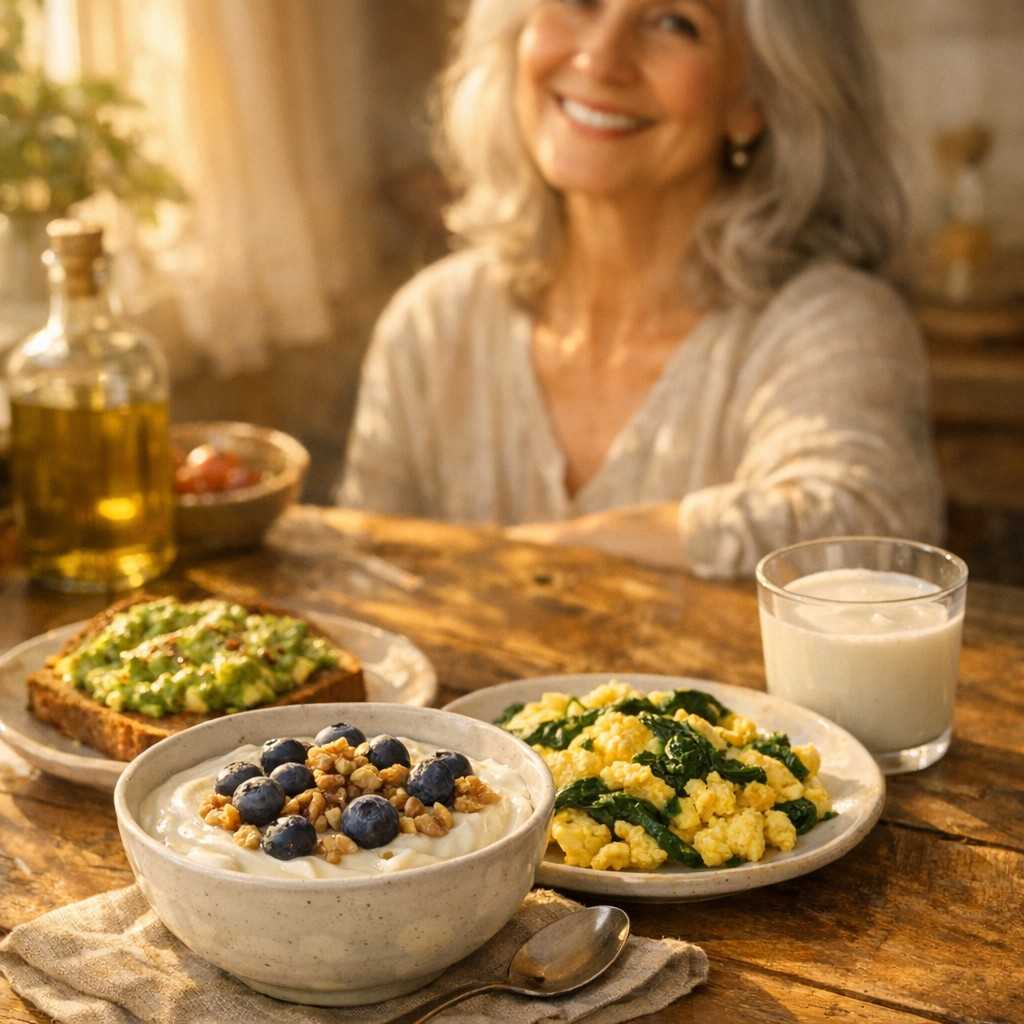
There’s a woman in her mid-80s who has been making the same breakfast for forty years. Two eggs, scrambled in a little olive oil. A handful of spinach wilted in the same pan. A slice of whole grain toast. A cup of coffee, black.
She doesn’t think of it as a health routine. It’s just what she eats. It’s what her mother ate before her.
When researchers began studying the world’s longest-living populations — the Blue Zones in Sardinia, Okinawa, the Greek island of Ikaria, the Nicoya Peninsula in Costa Rica — they found that no single food was responsible for their longevity. But there were unmistakable patterns.
Minimally processed foods dominated every table. These communities weren’t eating from boxes and bags. Meals were built from whole ingredients — vegetables, legumes, fish, eggs, olive oil, fermented dairy, fruit, nuts.
Plant foods were central, not an afterthought. Greens, beans, and whole grains weren’t “health food.” They were just food.
Protein was present but came from varied sources. Eggs from backyard hens. Yogurt from local farms. Small fish. Legumes cooked slowly. Not a protein shake in sight.
Fermented foods appeared regularly. Kefir, yogurt, aged cheeses, fermented vegetables — all quietly feeding the gut microbiome that we now understand is central to immune function, mental health, and metabolic wellness.
Consider the story of an older man in his late 70s who credits his energy to a morning ritual he started decades ago: a bowl of plain oats cooked on the stove, topped with a spoonful of honey, a handful of walnuts, and whatever berries were in season. Nothing fancy. Just consistent. “I’ve never had to diet,” he says. “I just eat real food in the morning and it sets the tone for everything else.”
That phrase — sets the tone — comes up over and over again in the stories of people who age well. A good breakfast doesn’t just fuel one morning. It shapes the decisions, appetite, and energy of the entire day.
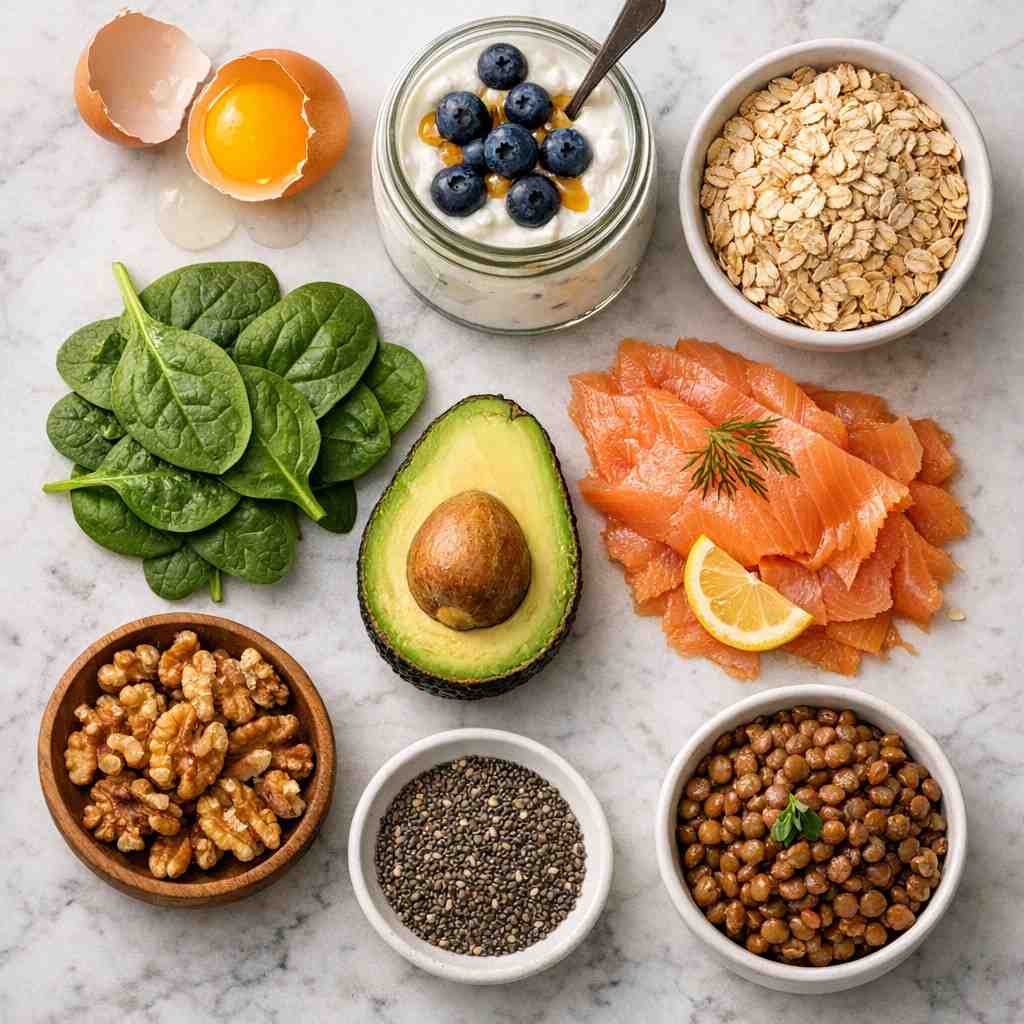
9 Breakfast Foods That Actually Support Healthy Aging and Longevity {#9-breakfast-foods}
1. Eggs
Few foods have been as unfairly maligned — and then vindicated — as the humble egg.
For decades, eggs were treated like a dietary villain because of their cholesterol content. We now understand that dietary cholesterol has a much more nuanced relationship with heart health than originally thought, and for most people, whole eggs are among the most nutritious foods available.
Why eggs support longevity: Eggs are one of the best sources of choline, a nutrient critical for brain health that many people don’t get enough of. They contain all nine essential amino acids, making them a complete protein. They’re rich in lutein and zeaxanthin, antioxidants that protect vision. And the protein and fat combination promotes satiety and blood sugar stability.
How to eat them: Scrambled with olive oil and spinach. Poached on whole grain toast. Hard-boiled and ready in the fridge. Mixed into a veggie-loaded frittata on Sunday that lasts all week.
Beginner tip: Don’t overthink it. Two eggs cooked in a teaspoon of olive oil with whatever vegetable you have on hand is already a genuinely excellent breakfast.
2. Greek Yogurt or Kefir
If there’s one breakfast food that consistently appears in the diets of people aging well, it’s some form of fermented dairy — Greek yogurt, kefir, or traditional cultured yogurt.
Why it supports longevity: The gut microbiome influences immune function, mental health, metabolic regulation, and inflammation. Fermented foods feed beneficial bacteria and introduce live cultures that support gut diversity. Greek yogurt is also exceptionally high in protein — a single cup can deliver 15–20 grams — making it one of the best high-protein breakfast ideas for people who want to protect muscle mass.
Kefir is even more probiotic-rich than yogurt and is well-tolerated by many people who find regular dairy difficult.
How to eat it: Plain, with berries and a drizzle of honey. Blended into a smoothie. Used as a base for a savory breakfast bowl with cucumber, olive oil, and herbs. Or just eaten straight from the container in the morning — no judgment.
Flavor ideas: Mango and ginger. Blueberries and walnuts. Peach and a sprinkle of cinnamon. The possibilities are endlessly simple.
3. Berries
Blueberries, raspberries, strawberries, blackberries — berries are some of the most antioxidant-dense foods that exist, and they happen to be delicious.
Why they support longevity: Berries are packed with anthocyanins, flavonoids, and polyphenols that have been associated in research with reduced inflammation, better cognitive aging, improved heart health, and even protection against certain cancers. They’re also relatively low in sugar compared to most fruit, meaning they don’t spike blood glucose the way other sweet foods do.
The blueberry case is particularly compelling. Studies have consistently found associations between blueberry consumption and better memory and cognitive function in older adults.
How to eat them: Stirred into oatmeal. Layered into yogurt. Eaten fresh by the handful. Frozen berries work just as well as fresh and cost a fraction of the price — throw them straight into your morning bowl or blend them into a smoothie.
Beginner tip: Keep a bag of frozen mixed berries in the freezer at all times. It’s one of the cheapest and easiest longevity upgrades you can make to your breakfast routine.
4. Oats
There’s something deeply satisfying about a bowl of oatmeal on a cool morning. And it turns out that feeling of comfort is backed by impressive nutrition.
Why oats support longevity: Oats contain a specific type of soluble fiber called beta-glucan, which has been shown to lower LDL cholesterol, improve blood sugar response, and feed beneficial gut bacteria. They provide sustained energy without blood sugar spikes, and they’re associated with reduced risk of cardiovascular disease — still the leading cause of death globally.
How to eat them: Classic stovetop oatmeal with fruit and nuts. Overnight oats prepared the night before — mix oats with yogurt or milk, add toppings in the morning, no cooking required. Savory oats with a soft-boiled egg and greens, which might sound strange but is genuinely delicious.
Flavor ideas: Cinnamon and apple. Banana and almond butter. Blueberry and walnut. Pumpkin spice in autumn. Date and cardamom for something a little Mediterranean.
5. Leafy Greens
This is the one that surprises people most. Greens at breakfast? But once you try spinach wilted into scrambled eggs, or arugula layered under smoked salmon on toast, you realize how naturally they fit.
Why leafy greens support longevity: Spinach, kale, arugula, and Swiss chard are rich in folate, magnesium, vitamin K, and lutein. They’re deeply anti-inflammatory. Research has linked regular leafy green consumption to slower cognitive decline, better heart health, and reduced risk of type 2 diabetes.
One study found that people who ate about one serving of leafy greens per day had cognitive function comparable to people 11 years younger. Eleven years.
How to eat them: Wilt into eggs. Blend into a green smoothie where the taste largely disappears. Layer raw onto toast with avocado and a poached egg. Make a quick sauté with garlic and olive oil alongside anything.
Beginner tip: Keep a bag of baby spinach in the fridge. It takes 60 seconds to wilt into a pan and adds virtually zero effort to any egg dish.
6. Nuts and Seeds
A small handful of walnuts or a tablespoon of chia seeds might seem almost too modest to matter. But the research on nuts and longevity is among the most consistent in nutritional science.
Why they support longevity: Walnuts are particularly rich in omega-3 fatty acids, which reduce inflammation and support brain and heart health. Almonds are high in vitamin E, magnesium, and protein. Chia seeds and flaxseeds deliver fiber, omega-3s, and plant-based protein in a compact package.
Multiple large studies have found that regular nut consumption is associated with lower rates of heart disease, diabetes, and all-cause mortality. People who eat nuts regularly tend to live longer — not by huge dramatic amounts, but measurably, consistently longer.
How to eat them: Tossed on top of yogurt or oatmeal. Mixed into overnight oats. Spread as almond or walnut butter on toast. Added to a smoothie for richness and protein.
Beginner tip: A small handful is all you need. Nuts are calorie-dense, so you don’t need a lot to get the benefits.
7. Avocados
Avocados became a cultural icon in the 2010s, but underneath the memes, there’s a genuinely excellent food.
Why avocados support longevity: Avocados are rich in monounsaturated fats — the same type found in olive oil — which are associated with heart health, reduced inflammation, and better cholesterol levels. They’re also high in potassium (more than bananas), folate, vitamin E, and fiber. The fat content helps your body absorb fat-soluble nutrients from other foods you eat alongside them.
How to eat them: Mashed on whole grain toast with a squeeze of lemon and red pepper flakes. Sliced alongside eggs. Added to a smoothie for creaminess. Simply halved with a pinch of salt and eaten with a spoon.
Flavor ideas: Avocado toast with a poached egg and microgreens. Avocado with smoked salmon and capers. Avocado mashed with olive oil and herbs on sourdough.
8. Salmon or Sardines
Fatty fish at breakfast might feel like a cultural leap for some people, but in Mediterranean countries, it’s completely unremarkable. Smoked salmon on toast. Sardines with olive oil. These are everyday breakfast foods in parts of the world where people routinely live long, healthy lives.
Why fatty fish supports longevity: Salmon and sardines are among the richest dietary sources of omega-3 fatty acids, particularly EPA and DHA. These fats reduce inflammation, support brain health, protect against heart disease, and have been associated with reduced risk of depression. Sardines also deliver impressive amounts of calcium (via the soft bones), vitamin D, and selenium.
How to eat them: Smoked salmon on whole grain toast with avocado and a little red onion. Canned sardines mashed with mustard and lemon on sourdough. A small salmon fillet alongside scrambled eggs for a weekend breakfast worth savoring.
Beginner tip: Canned sardines and smoked salmon are affordable, shelf-stable, and require zero cooking. They’re genuinely easy breakfast proteins that most people overlook.
9. Beans and Legumes
Beans for breakfast might sound unusual in a Western context. But in Blue Zone communities — from Sardinia to Nicoya — legumes are eaten at every meal, including the first one.
Why legumes support longevity: Beans are rich in plant protein, soluble fiber, resistant starch, folate, iron, and magnesium. They feed beneficial gut bacteria, stabilize blood sugar, lower cholesterol, and provide long-lasting satiety. Research consistently places legume consumption among the strongest dietary predictors of longevity across diverse populations.
How to eat them: A small bowl of white beans sautéed with olive oil, garlic, and herbs alongside eggs. A scoop of hummus (made from chickpeas) spread on toast. Black beans in a breakfast burrito or scramble. Lentil soup is genuinely wonderful as a morning meal in many cultures.
Beginner tip: Canned beans are nutritionally excellent and take seconds to prepare. There’s no shame in opening a can and warming with olive oil and spices.
The Best Longevity Breakfast Combinations {#best-combinations}
Individual foods are good. But food combinations are where the real magic happens — different nutrients working synergistically, textures and flavors making it something you actually want to eat.
Here are some combinations that genuinely stand up to both science and taste:
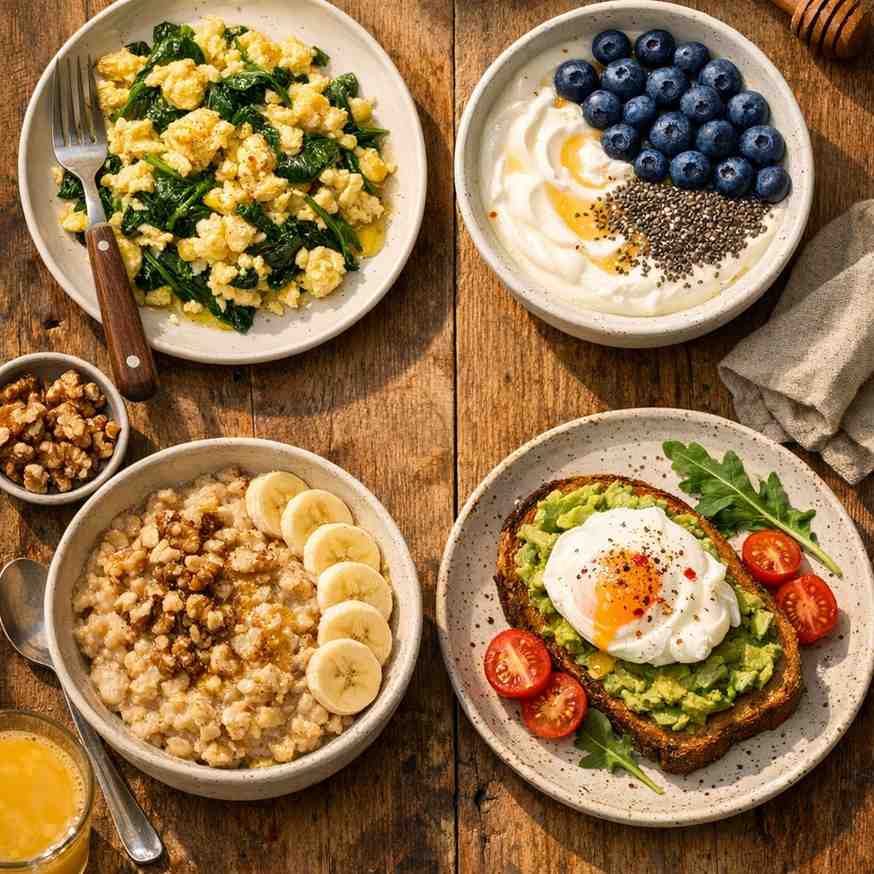
🥚 Eggs + Spinach + Olive Oil The classic. Olive oil helps absorb the fat-soluble vitamins in the spinach. The eggs deliver complete protein and choline. Simple, fast, endlessly adaptable.
🫐 Greek Yogurt + Berries + Chia Seeds High protein, high antioxidants, excellent fiber and omega-3s. Top with a small handful of walnuts and you have one of the most nutrient-dense breakfasts imaginable, assembled in about two minutes.
🥣 Oats + Walnuts + Blueberries Beta-glucan fiber from the oats, omega-3s from the walnuts, anthocyanins from the blueberries. Sustained energy, anti-inflammatory, and genuinely delicious.
🥑 Avocado Toast + Eggs The combination of healthy fats and complete protein makes this one of the best breakfasts for satiety and blood sugar stability. Use whole grain or sourdough bread for extra fiber.
🐟 Smoked Salmon + Whole Grain Toast + Cream Cheese or Avocado Omega-3s, protein, complex carbohydrates. A Mediterranean-inspired breakfast that feels luxurious but takes five minutes.
🫘 White Beans + Wilted Greens + Olive Oil + Eggs The full longevity breakfast. It’s what breakfast looks like in parts of the Mediterranean and it’s as good as it sounds.

Breakfast Habits That May Support Longevity {#longevity-habits}
The foods matter. But the habits around those foods might matter just as much.
Start with water. After seven or eight hours without fluids, your body wakes up mildly dehydrated. Drinking a glass of water before coffee or food jumpstarts digestion, improves alertness, and is one of the simplest things you can do for your health.
Get some morning sunlight. Even just ten minutes outside — on the porch, walking to get the newspaper, sitting by a window — helps regulate your circadian rhythm, supports vitamin D synthesis, and sets up better sleep that night. People who age well often have strong daily rhythms.
Prioritize protein early. Aim for at least 25–30 grams of protein at breakfast. This is particularly important for anyone over 40 who wants to maintain muscle mass. Eggs, Greek yogurt, salmon, beans — all solid choices.
Don’t skip fiber. Most people get far less than the recommended daily amount. Oats, berries, beans, avocado, and whole grain bread all contribute. A fiber-rich breakfast feeds your gut microbiome and keeps you full longer.
Eat slowly. This sounds almost too simple, but it matters. Eating quickly is associated with overeating, poor digestion, and higher blood sugar spikes. People in Blue Zone communities don’t eat at their desks. They sit down. They eat together. They take their time.
Avoid ultra-processed foods in the morning. Sugary cereals, pastries, flavored coffee drinks, processed breakfast bars — these set a different metabolic tone for the day. Not forever forbidden, but not a daily foundation.
Be consistent more than perfect. The people who age best aren’t eating a perfect breakfast every single day. They just eat reasonably well most days, without drama or guilt. Consistency over years beats perfection for a week.
Should Everyone Eat Breakfast? {#should-everyone-eat-breakfast}
Here’s an honest answer: no, not necessarily.
Some people genuinely thrive with breakfast. Their energy is better, their appetite is more regulated, their mood is more stable. For these people — and this describes most people — breakfast is a meaningful opportunity.
Other people do well with intermittent fasting — eating within a narrower window later in the day. For some, this approach helps with insulin sensitivity, mental clarity, and weight management. The research is genuinely mixed, and individual responses vary widely.
The honest takeaway: Pay attention to your own body. If you feel better with breakfast, eat breakfast. If you consistently feel better skipping it and eating at noon, that’s worth exploring too. Neither approach has a monopoly on longevity.
What matters most is the quality of what you eat when you do eat — not whether you follow a specific meal timing protocol.
Common Breakfast Mistakes That Can Hurt Long-Term Health {#common-mistakes}
Most of these aren’t dramatic. They’re just quiet habits that accumulate over years.
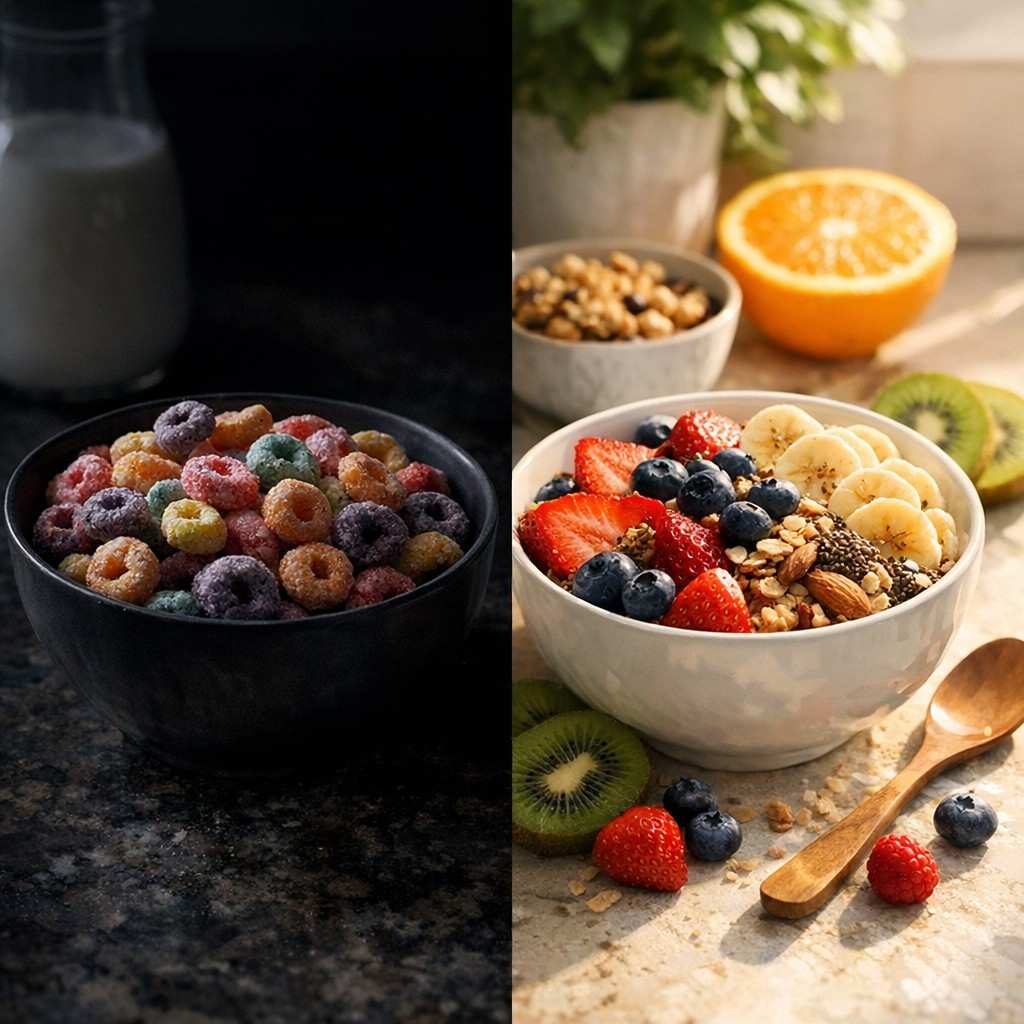
Eating sugary cereals as a staple. A bowl of sweetened cereal is essentially dessert at 7 a.m. It spikes blood sugar, provides minimal protein and fiber, and leaves most people hungry again within an hour. Occasional? Fine. Daily foundation? Not ideal.
Relying on ultra-processed pastries. Muffins, croissants, packaged breakfast bars — these are often high in refined flour, sugar, and seed oils, with very little of what the body actually needs in the morning.
Low protein breakfasts. Toast with jam, fruit alone, or a small yogurt with granola can leave you undershooting protein by 15–20 grams. Over years and decades, this adds up in terms of muscle maintenance.
Too little fiber. A breakfast without fiber often means a hunger crash before lunch, and less support for the gut bacteria that influence so much of our health.
Skipping water. Starting the day with coffee before any water is a habit that many people don’t notice affects them — but it often does, in the form of mild headaches, slower digestion, or difficulty concentrating.
Eating in a rush. Not so much what you eat, but how. Rushed, distracted eating is harder on digestion and makes it easier to overeat.
Easy Healthy Breakfast Ideas for Busy Mornings {#easy-ideas}
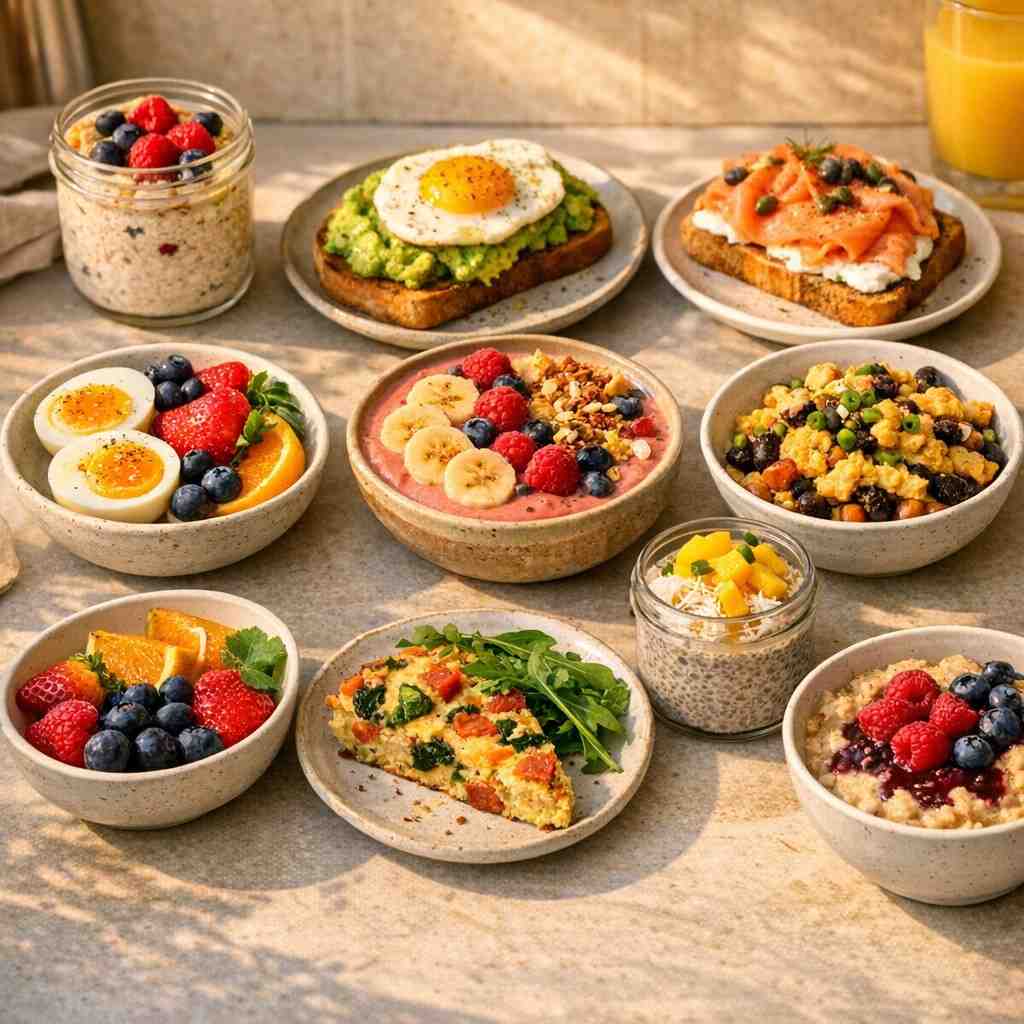
You don’t need an hour in the kitchen. Most of these take five minutes or less.
- Overnight oats — mix oats, yogurt, milk, and berries the night before. Grab from the fridge in the morning.
- Greek yogurt parfait — layer yogurt, frozen berries (thawed overnight), chia seeds, and a handful of walnuts. Two minutes.
- Two-egg scramble with spinach — wilt spinach in olive oil, add eggs, season with salt and pepper. Five minutes.
- Avocado toast with a poached egg — mash avocado on whole grain toast, poach one egg, done.
- Smoked salmon on rye with cream cheese — open the package, assemble, eat. No cooking.
- Chia seed pudding — mix chia seeds with milk or plant milk the night before. Top with fruit.
- Hard-boiled eggs + fruit + handful of almonds — prep a batch of eggs on Sunday, eat all week.
- Smoothie with spinach, frozen berries, Greek yogurt, and flaxseed — blends in two minutes, portable.
- Canned sardines on toast with mustard and lemon — surprisingly good, takes three minutes.
- Warm bean bowl — heat canned white beans with olive oil, garlic, and herbs. Top with a fried egg.
- Leftover lentil soup — if you made lentil soup for dinner, heat a cup for breakfast. Genuinely excellent.
- Banana with almond butter and a couple of hard-boiled eggs — zero prep if eggs are already cooked.
FAQ {#faq}
What is the healthiest breakfast for longevity? There’s no single “best” breakfast, but consistently, the most longevity-supporting breakfasts combine quality protein (eggs, yogurt, fish), fiber (oats, berries, vegetables), and healthy fats (olive oil, avocado, nuts). A Mediterranean-style breakfast — eggs with greens and olive oil, or yogurt with berries and seeds — checks most of the boxes.
Are eggs healthy as you age? Yes, for most people. Eggs are rich in complete protein, choline for brain health, and antioxidants for eye health. Current research suggests whole eggs do not significantly raise cardiovascular risk for most healthy people. If you have specific heart concerns, discuss with your doctor.
Is oatmeal good for healthy aging? Very much so. Oats contain beta-glucan fiber, which lowers LDL cholesterol and stabilizes blood sugar. They’re associated with reduced heart disease risk and support gut health. Choose rolled or steel-cut oats over instant, and add protein and healthy fat to the bowl.
What breakfast foods reduce inflammation? Berries, leafy greens, fatty fish, walnuts, olive oil, and turmeric are all anti-inflammatory foods well-suited to breakfast. Avoiding ultra-processed foods and added sugars in the morning also meaningfully reduces inflammatory load.
Is Greek yogurt healthy for older adults? Yes, and particularly good. High in protein (important for muscle maintenance), rich in probiotics (important for gut health), and a good source of calcium and B12. Choose plain varieties and add your own fruit to avoid the added sugar in flavored versions.
Should older adults eat more protein in the morning? Research increasingly supports this. Older adults need more dietary protein per kilogram of body weight than younger adults to maintain muscle mass, and distributing that protein across meals — including breakfast — is more effective than concentrating it at dinner. Aim for 25–35 grams at breakfast.
What foods help maintain energy all day? The combination of protein, fiber, and healthy fat is most effective for sustained energy. High-protein breakfasts with complex carbohydrates (oats, whole grain bread) and healthy fats (avocado, olive oil, nuts) prevent the blood sugar swings that cause afternoon crashes.

Final Thoughts {#final-thoughts}
Here’s the truth about eating well for longevity: it doesn’t have to be complicated.
The people thriving in their 70s, 80s, and 90s with good energy and sharp minds aren’t following complicated protocols. They’re eating real food in the morning — eggs, yogurt, oats, berries, greens, a good piece of bread with olive oil. They’re drinking water. They’re not rushing. They’ve been doing some version of this for decades.
That consistency is the secret that doesn’t get enough credit.
You don’t have to overhaul everything tomorrow. You don’t have to buy a refrigerator full of exotic superfoods. You could just try this: tomorrow morning, add some protein to your breakfast. A couple of eggs. A bowl of Greek yogurt. A handful of walnuts in your oatmeal.
Do that most mornings. Over months and years, the small investments add up in ways that show up in your energy, your clarity, your mood, and eventually, your health.
Breakfast isn’t magic. But it is a daily opportunity. And that’s actually quite a lot.
Looking for more realistic healthy meal ideas that actually fit real life? Visit Best Carb Recipes for simple recipes, healthy inspiration, and easy ways to eat better without overcomplicating it.

Food lover and creator of BestCarbRecipes, sharing easy recipes, low-carb meal ideas, healthy cooking inspiration, calorie-friendly tips, and practical food guides to make everyday eating simpler, healthier, and more delicious.