The Healthiest Part of Chicken You Should Be Eating (Most People Get This Wrong)
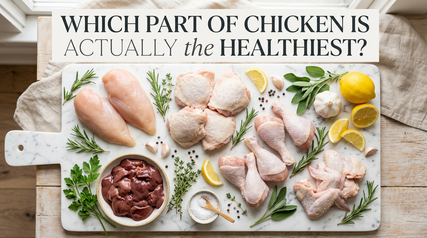
Which Part of Chicken Is Good for Health?
Introduction
Okay, real talk.
I still remember standing in the grocery store meat aisle about four years ago, completely frozen. In my left hand, a pack of chicken breasts. In my right, a pack of juicy-looking chicken thighs. And in my head? A full-on anxiety spiral about which one was going to help me lose the 20 pounds I’d been promising myself I’d deal with “after the holidays.”
(Spoiler: it was always after the holidays.)
A woman behind me was getting impatient. I could feel the judgment. I just grabbed both, threw them in the cart, and Googled it in the parking lot like a completely normal person.
Here’s the thing — most people are exactly where I was. We know chicken is “healthy.” It’s the default diet food, the protein gym bros won’t shut up about, the thing every nutritionist recommends. But nobody tells you which part is actually doing the heavy lifting for your health goals.
Is the breast really the holy grail? Are thighs secretly terrible? Should you feel guilty eating the skin? What even is chicken liver, and should you be eating it?
I’ve spent the last several years eating low carb, experimenting with keto, losing weight (and finding it, and losing it again — very human), and learning a LOT about chicken along the way. This guide is everything I wish someone had told me in that grocery store parking lot.
Let’s dig in.
Why Chicken Is One of the Most Popular Healthy Proteins
There’s a reason chicken shows up on almost every healthy eating list, every diet plan, and every “foods you should eat more of” article published in the last three decades.
It’s not just hype. Chicken genuinely earns its spot.
First, it’s incredibly versatile. You can grill it, bake it, slow cook it, throw it in a salad, shred it into tacos, or turn it into a creamy low-carb soup. It doesn’t demand much from you, and it delivers every single time.
Second, it’s a complete protein — meaning it contains all nine essential amino acids your body can’t make on its own. That matters a lot when you’re trying to build or preserve muscle, especially while cutting calories.
Third, compared to red meats like beef or pork, chicken is generally lower in saturated fat (depending on the cut), making it a friendlier choice for heart health and cholesterol management.
And finally? It’s affordable. You don’t have to blow your grocery budget to eat well when chicken is on the menu.
But here’s what most people miss: not all chicken is created equal. The cut you choose, the way you cook it, and whether you leave the skin on can change the entire nutritional profile of your meal. That’s what we’re here to sort out.
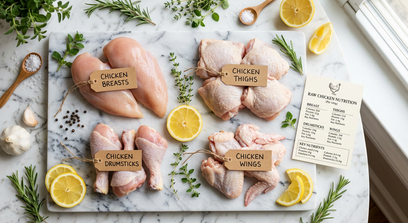
Nutritional Breakdown of Different Chicken Parts
Let’s get into the actual numbers — but in a way that doesn’t feel like a chemistry class, I promise.
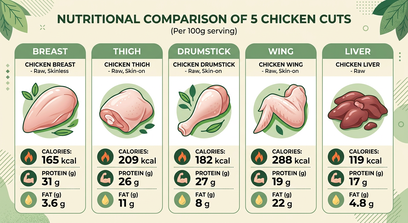
All values below are approximate for a 100g (3.5 oz) cooked serving without added sauces or marinades.
Chicken Breast
This is the superstar. The celebrity. The one that’s been on every diet plan since the 1980s.
- Calories: ~165
- Protein: ~31g
- Fat: ~3.6g
- Carbs: 0g
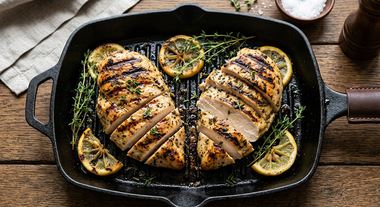
Chicken breast is the leanest cut of the whole bird. It’s almost entirely white muscle fiber with very little fat marbled through it. That’s why it’s the go-to choice for anyone counting calories, building muscle, or following a low-fat diet.
The downside? It can dry out faster than your social life during a January detox if you cook it wrong. We’ll talk cooking tips later. But nutritionally, breast meat is hard to beat.
📸 Image Prompt: Close-up of a perfectly grilled chicken breast on a wooden cutting board, sliced to show juicy interior, garnished with fresh rosemary and lemon. Clean, bright food photography.
Chicken Thighs
Thighs are the underdog that deserves way more respect.
- Calories: ~209
- Protein: ~26g
- Fat: ~10.9g
- Carbs: 0g
Yes, thighs have more fat than breasts. But here’s the context that changes everything: most of that fat is unsaturated — the same kind found in olive oil and avocados. It’s not the dietary villain it used to be painted as.
In fact, that higher fat content is exactly why thighs stay moist and flavorful no matter how you cook them. They’re harder to mess up, tastier on average, and still pack a solid protein punch. For keto and low-carb eaters especially, the higher fat in thighs can actually be an advantage.
Chicken Wings
Ah, wings. The Friday night staple that every diet guru side-eyes.
- Calories: ~203
- Protein: ~30g
- Fat: ~8.1g
- Carbs: 0g
Without the skin and without sauces loaded in sugar and additives, wings are actually a respectable source of protein. The problem is almost nobody eats plain wings. Once you add buffalo sauce, honey glaze, or a heavy batter? The calorie count climbs fast.
Plain baked or air-fried wings with a clean spice rub? Totally fine on a low-carb or keto plan. Drenched in sweet barbecue sauce at a sports bar? Maybe a once-in-a-while thing.
Chicken Drumsticks
Drumsticks are the classic kid-friendly cut — and honestly, they deserve a seat at the adult healthy-eating table too.
- Calories: ~172
- Protein: ~28g
- Fat: ~5.7g
- Carbs: 0g
They sit right between breast and thigh in terms of fat and calorie content. The meat is dark, which means it has slightly more iron and zinc than white breast meat — both minerals your body genuinely needs. They’re also one of the most affordable cuts, which matters when you’re feeding a family or trying to meal prep on a budget.
Chicken Liver
This one tends to divide people. You either grew up eating liver and have complicated feelings about it, or you’ve never touched it and you’re mildly horrified at the suggestion.
But hear me out — chicken liver is a nutritional powerhouse.
- Calories: ~116
- Protein: ~17g
- Fat: ~4.4g
- Carbs: ~0.9g
- Vitamin A: 267% of daily value
- Iron: 72% of daily value
- Folate: 65% of daily value
- Vitamin B12: 352% of daily value
Chicken liver is one of the most nutrient-dense foods on earth. We’re talking vitamins and minerals in concentrations that most vegetables can only dream about. It’s rich in heme iron (the kind your body absorbs most easily), it’s loaded with B vitamins for energy, and it supports liver detoxification in your own body.
It’s not something you’d eat every day (too much vitamin A can become a problem), but once or twice a week? Genuinely good for you.
Healthiest Part of Chicken for Weight Loss
If weight loss is your main goal, chicken breast is your best friend.
Here’s why it wins:
- Lowest in calories per gram of protein
- Almost zero fat to worry about
- High protein keeps you full longer, reducing the urge to snack
- Easy to portion and track
The high protein content in chicken breast is particularly important for weight loss. Studies consistently show that protein increases satiety hormones, decreases hunger hormones, and helps preserve lean muscle mass when you’re eating in a calorie deficit. All of that means you lose more fat and less muscle — which is exactly what you want.
That said, don’t completely write off thighs and drumsticks either. The slight extra fat in those cuts can actually help you stay satisfied on a low-carb diet, where fat is used for energy. Context matters.
Quick tip: If you’re calorie counting, go breast. If you’re doing keto or low-carb and want something more satisfying, thighs are a brilliant choice.
Best Chicken Cuts for Keto and Low Carb Diets
All chicken cuts are naturally zero-carb — so technically, every part of the chicken is keto-friendly. The question is which cuts best support the higher-fat approach that keto requires.
Here’s how the cuts rank for a keto lifestyle:
Top picks for keto:
- Chicken thighs (skin-on) — Higher fat, incredibly satisfying, zero carbs
- Chicken drumsticks — Good fat content, hearty texture, budget-friendly
- Chicken wings (plain) — Great fat ratio, perfect for air frying
- Whole roast chicken — You get a mix of everything, including the skin
Decent but less optimal for keto:
- Chicken breast — Too lean if you’re trying to hit fat macros, but still useful in mixed dishes with added fats like butter or cheese
The big thing to watch on keto isn’t really the chicken itself — it’s what you put on it. Sweet sauces, sugary marinades, and breaded coatings are the real carb culprits. Keep it simple with olive oil, butter, herbs, garlic, and spices, and you’re golden.
(Looking for recipe ideas? Check out our keto chicken thigh recipes — some of my personal favorites are on there!)
Chicken Breast vs Chicken Thighs — Which Is Better?
This is the most-asked question in the chicken universe, and the honest answer is: it depends on what you’re trying to do.
Choose chicken breast if:
- You’re in a calorie deficit for weight loss
- You’re following a low-fat diet
- You want maximum protein per calorie
- You’re bulking and want to keep fat intake controlled
Choose chicken thighs if:
- You’re on keto or low-carb and need more fat
- You want richer flavor and juicier texture
- You tend to overcook chicken and need a more forgiving cut
- You want more affordable meal prep options
Neither one is objectively “better.” A dry, flavorless chicken breast cooked out of fear doesn’t serve anyone. A beautifully cooked, herb-marinated chicken thigh with roasted vegetables is an absolute win for your health and your taste buds.
The best chicken is the one you actually enjoy eating consistently.
Is Chicken Skin Healthy or Unhealthy?
The chicken skin debate has been going on for decades. Let’s settle it.
The bad news: Chicken skin is high in fat — mostly saturated and monounsaturated. A 30g serving of cooked chicken skin adds roughly 90-100 calories and 8-9g of fat to your meal. If you’re strictly counting calories, that matters.
The good news: The fat in chicken skin isn’t the nutritional disaster it was once made out to be. A significant portion is oleic acid — the same heart-healthy fat in olive oil. Research has gradually shifted away from demonizing all dietary fat, and context really does matter.
The practical answer:
If you’re on a low-calorie diet for weight loss, removing the skin makes it meaningfully easier to hit your targets. If you’re on keto, keeping the skin on adds fat and flavor without the carbs — it actually works in your favor.
For most generally healthy people eating balanced meals, the occasional skin-on chicken thigh or roast chicken with crispy skin isn’t going to derail your health. Just don’t make it every meal, every day.
Crispy chicken skin in moderation? Totally liveable. Guilt-free, even.
The Worst Chicken Parts to Eat Too Often
Alright, let’s be honest about the ones that don’t make the health podium.
Heavily processed chicken products — chicken nuggets, frozen patties, deli slices, fast food chicken sandwiches — are technically chicken, but they’re engineered to be hyperpalatable and are often loaded with:
- Added sodium (sometimes 800mg+ per serving)
- Refined starches and fillers
- Sugar in sauces and coatings
- Unhealthy seed oils from deep frying
Eating these regularly is very different from eating a grilled chicken breast. The processing strips away much of what makes chicken nutritious and adds a lot of what makes processed food problematic.
Fried chicken — while undeniably delicious — is also one to enjoy sparingly. The batter adds a significant carb hit, and deep frying in low-quality oils drives up inflammation-promoting fats.
This doesn’t mean you can never enjoy these things. It means they shouldn’t be your primary source of chicken protein if you’re working toward health goals.
Healthy Ways to Cook Chicken
The chicken itself is only half the story. How you cook it determines whether dinner is a health win or a calorie bomb.
Air Fryer
This has become my personal favorite for a reason. Air frying uses little to no added oil, creates a crispy texture that rivals deep frying, and keeps cooking time short. Chicken thighs and wings especially come out beautifully in an air fryer — crispy skin, juicy interior, 25 minutes flat.
Grilled
Grilling allows fat to drip away from the meat, which means naturally lower calories without sacrificing flavor. The char adds a depth of taste that makes even simply-seasoned chicken incredibly satisfying. Perfect for breast, thighs, and drumsticks.
Oven Baked
The workhorse of meal prep. You can season a whole tray of chicken pieces, throw them in the oven, and have protein ready for the week. Baking at a higher temperature (400°F/200°C) helps you get some caramelization and keeps the chicken from drying out. Adding a bit of olive oil or butter helps enormously.
Slow Cooker
This method is a gift for busy people. Throw in chicken thighs, some low-carb broth, garlic, and herbs in the morning — come home to fall-apart, incredibly tender chicken in the evening. Great for making shredded chicken for lettuce wraps, salads, or bowls.
(Psst — our slow cooker keto chicken recipes at bestcarbrecipes.com are worth bookmarking for busy weeks.)
Mistakes People Make When Cooking Healthy Chicken Meals
I’ve made every single one of these, so consider this hard-won wisdom.
Mistake #1: Cooking straight from the fridge. Cold chicken goes into a hot pan and cooks unevenly — you end up with overcooked edges and an undercooked center. Let your chicken sit at room temperature for 15-20 minutes before cooking.
Mistake #2: Not seasoning enough. Plain chicken is not a virtue. It’s a punishment. Season generously with salt, pepper, garlic powder, paprika, herbs — whatever you love. Flavor has no calories.
Mistake #3: Overcooking out of food safety fear. Chicken is safe to eat at an internal temperature of 165°F (74°C). If you’re pushing it to 180°F+ because you’re scared, you’re getting hockey puck breast meat. Get a meat thermometer. They cost less than a coffee.
Mistake #4: Using sugary sauces and calling it healthy. Store-bought teriyaki, honey mustard, and BBQ sauces can add 10-20g of sugar per serving. Read labels, or make your own low-carb versions.
Mistake #5: Ignoring resting time. After cooking, let your chicken rest for 5 minutes before cutting. The juices redistribute, the meat stays moist, and your dinner actually tastes good.
Easy Healthy Chicken Meal Ideas
Let’s keep this practical. Here are some quick ideas to get you started this week.
For busy weeknights:
- Air fryer chicken thighs with roasted broccoli and olive oil
- Sheet pan chicken breast with zucchini and cherry tomatoes
- Shredded slow cooker chicken in lettuce cups with avocado
For meal prep:
- Batch-baked chicken breasts, sliced for salads throughout the week
- Marinated grilled chicken thighs with cauliflower rice
- Chicken drumstick soup with leafy greens and bone broth
For low-carb keto dinners:
- Crispy skin-on chicken thighs with creamed spinach and butter
- Chicken wings tossed in hot sauce and butter (keto buffalo wings!)
- Chicken liver pâté on cucumber slices as a snack
(All of these and more are over at bestcarbrecipes.com if you want step-by-step guidance!)
Frequently Asked Questions
Is chicken breast healthier than thighs?
For calorie control and weight loss, chicken breast wins on pure numbers — it’s higher in protein and lower in calories and fat. But chicken thighs offer more flavor, more fat-soluble nutrients, and a more forgiving cooking experience. For keto and low-carb diets, thighs can actually be more appropriate. Neither is universally “healthier” — it depends on your goals.
Can I eat chicken every day?
Yes, for most people, eating chicken daily is safe and nutritious. It’s a complete protein with zero carbs and a range of essential vitamins and minerals. To keep things nutritionally balanced, vary your cuts, vary your cooking methods, and pair it with a range of vegetables. If you’re eating chicken liver specifically, two to three times per week is a reasonable limit due to its high vitamin A content.
Is dark meat unhealthy?
No. Dark meat — thighs, drumsticks, wings — has a slightly higher fat content than white breast meat, but that fat is largely unsaturated and not the health danger it was once portrayed as. Dark meat is also richer in iron, zinc, and several B vitamins. It’s a healthy and valuable part of a balanced diet.
What chicken part has the most protein?
Chicken breast has the most protein per calorie, with roughly 31g per 100g serving. However, all chicken cuts are high in protein. Wings actually have a surprisingly high protein percentage when you look at pure protein content, while thighs and drumsticks aren’t far behind the breast.
Is chicken skin bad for weight loss?
Chicken skin adds calories and fat, so removing it does make calorie control easier. That said, the fat in chicken skin isn’t inherently harmful — it’s mostly unsaturated. If you’re on keto or simply maintaining your weight while eating whole foods, skin-on chicken is perfectly fine. For strict calorie deficit eating, skinless is the smarter choice for hitting your targets.
What’s the healthiest way to eat chicken?
Grilled, baked, air-fried, or slow-cooked with minimal added fat and no sugary sauces. Season with herbs and spices, pair with vegetables, and avoid breading or deep frying for everyday meals.
Conclusion
So there you have it — everything you need to navigate the chicken aisle without standing there for seven minutes holding two packages while a stranger judges your life choices.
Here’s the simple version to take away with you:
Chicken breast is the best pick for weight loss and calorie control. Chicken thighs are your friend on keto and low-carb, and honestly, they’re just more delicious. Drumsticks are an affordable, nutritious middle ground. Wings are perfectly healthy when they’re not swimming in sugary sauces. And chicken liver, strange as it sounds, is one of the most nutrient-dense foods you can put in your body.
Every part of the chicken has a role to play. The key is matching the cut to your goals, cooking it well, and keeping the sauces clean.
The best diet is the one that’s sustainable and enjoyable — and if you can look forward to dinner every night, you’ve already won half the battle.
Now go cook some chicken. And if you need inspiration for exactly how to do that in the most delicious, low-carb, health-forward way possible, I’ve got you covered over at bestcarbrecipes.com.

Food lover and creator of BestCarbRecipes, sharing easy recipes, low-carb meal ideas, healthy cooking inspiration, calorie-friendly tips, and practical food guides to make everyday eating simpler, healthier, and more delicious.