9 Rules of Keto That Will Transform Your Body (Even If You’ve Failed Before)
Introduction: The Keto Story That Changes Everything
9 Rules of Keto That Will Transform Your Body (Even If You’ve Failed Before)
Sarah stared at the scale, defeated.
Three weeks into her “keto journey,” and she had gained two pounds. She’d cut out bread, said goodbye to pasta, and was practically living on bacon and cheese. So why wasn’t it working?
Here’s the truth most people won’t tell you: keto isn’t just about eating fat and avoiding carbs. It’s a metabolic shift that requires understanding a few critical rules. Skip them, and you’ll end up like Sarah — frustrated, confused, and ready to quit.
But follow them? That’s when the magic happens.
The ketogenic diet has helped millions of people shed stubborn weight, skyrocket their energy, and finally break free from sugar cravings. The problem? Most beginners dive in without a roadmap, make a handful of preventable mistakes, and conclude that “keto doesn’t work for me.”
It does work. You just need to know the rules.
In this guide, I’m breaking down the 9 rules of keto that separate the people who transform their bodies from the ones who spin their wheels. These aren’t vague tips you’ll forget tomorrow. They’re the foundational principles that make keto actually work — explained in plain English, with real-life examples, and practical steps you can take today.
Whether you’re completely new to low-carb living or you’ve tried keto before and stumbled, this is the beginner-friendly blueprint you’ve been looking for. Let’s get into it.
What Are the 9 Rules of Keto Everyone Should Know?
A Complete Beginner’s Guide to Mastering the Ketogenic Diet
What Is the Keto Diet?
The ketogenic diet — or “keto” for short — is a low-carb, high-fat eating plan designed to shift your body into a state called ketosis.
Here’s the simple science: Your body normally runs on glucose, which comes from the carbohydrates you eat. When you drastically reduce carbs and replace them with healthy fats, your body switches fuel sources. It starts breaking down fat into molecules called ketones, which become your new primary energy source.
Think of it like switching your car from gasoline to electricity. Same vehicle, different fuel. And just like an electric car can be surprisingly powerful, your body on ketones often feels more energized, focused, and stable.
Ketosis typically begins when you eat fewer than 20–50 grams of net carbs per day. Net carbs are total carbs minus fiber. Once in ketosis, your body becomes incredibly efficient at burning fat for energy — including the fat stored on your body.
But keto isn’t just a weight-loss hack. Many people report:
- Steady, all-day energy without crashes
- Reduced hunger and fewer cravings
- Improved mental clarity and focus
- Better blood sugar control
- Decreased inflammation
The key is doing it right — and that’s where our 9 rules come in.
Why Most Beginners Fail Keto
Before we dive into the rules, let’s talk about why so many people quit keto within the first month. Understanding these pitfalls will help you sidestep them completely.
Unrealistic Expectations
Social media is flooded with dramatic “I lost 20 pounds in 2 weeks!” keto transformations. While rapid water weight loss is common in week one, sustainable fat loss takes time. When the scale slows down, many beginners panic and assume the diet “stopped working.”
Too Many Hidden Carbs
That “sugar-free” coffee creamer? The “low-carb” protein bar? The handful of cherry tomatoes that “can’t possibly matter”? These stealthy carb sources add up fast and can kick you out of ketosis without you even realizing it.
The “Keto Flu” Surprise
In the first week, many beginners experience headaches, fatigue, irritability, and brain fog — collectively known as the keto flu. It’s not the flu, and it’s not dangerous. It’s simply your body adapting to a new fuel source. But because most people don’t expect it, they assume keto is making them sick and quit.
Lack of Preparation
Winging it on keto is a recipe for failure. When hunger strikes and you have no keto-friendly options ready, you’re one convenience store trip away from blowing your carb budget on a bag of chips.
Fear of Fat
After decades of “fat makes you fat” messaging, many beginners still subconsciously avoid the very nutrient keto relies on. They eat lean meats, skip the avocado, and wonder why they’re starving and exhausted.
The good news? Every single one of these problems is preventable. Let’s get to the rules that will set you up for success.

The 9 Rules of Keto Everyone Should Know
These are the non-negotiables. Master them, and keto becomes simple, sustainable, and surprisingly enjoyable.
Rule 1: Keep Carbs Very Low
The golden rule of keto: carbohydrates are your limit, not your goal.
To enter and maintain ketosis, most people need to stay between 20–50 grams of net carbs per day. Net carbs = total carbs minus fiber. For beginners, starting at the lower end (around 20 grams) gives you the fastest path into ketosis and the most room for error.
Why it matters: Every gram of carbohydrate you eat is a potential glucose molecule. Eat too many, and your body says, “Thanks, I’ll stick with sugar,” shutting down ketone production. Stay low, and your body has no choice but to burn fat.
How to apply it:
- Track your food for the first 2–3 weeks using an app like Carb Manager or Cronometer. Eyeballing portions is a beginner trap.
- Read every label. “Low-carb” marketing claims are often misleading.
- Prioritize non-starchy vegetables (spinach, broccoli, zucchini, cauliflower) for your carb allowance. They’re nutrient-dense and high in fiber.
Beginner mistake: Thinking “net carbs” means you can eat unlimited sugar alcohols. Some sugar alcohols (like maltitol) still spike blood sugar. Stick to erythritol, stevia, or monk fruit.
Pro tip: If you’re not sure whether a food fits, ask yourself: Did this come from the ground looking like this, or was it made in a factory? Whole foods are almost always safer bets.
Rule 2: Eat Enough Healthy Fats
On keto, fat is not the enemy — it’s your fuel.
This is the mental shift that trips up the most beginners. For decades, we’ve been told fat is bad. On keto, fat becomes your primary energy source, replacing the calories you used to get from carbs.
Why it matters: If you cut carbs and fear fat, you’re eating almost nothing. You’ll be hungry, tired, and miserable. Your body needs fuel. On keto, that fuel is fat.
How to apply it:
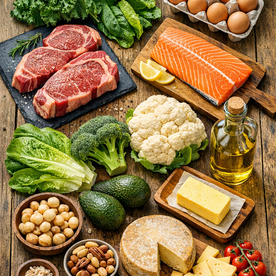
- Add healthy fats to every meal: olive oil, avocado, nuts, seeds, coconut oil, grass-fed butter, fatty fish.
- Don’t be afraid of marbled meat, chicken thighs with skin, or full-fat dairy.
- Aim for roughly 70–80% of your daily calories from fat. That sounds like a lot, but it happens naturally when you cook with butter, dress salads with olive oil, and choose fattier cuts of meat.
Beginner mistake: Going “lean keto” — eating skinless chicken breast, egg whites, and steamed vegetables with no added fat. You’ll feel awful and quit by Wednesday.
Pro tip: Keep a bottle of high-quality olive oil on your counter. Drizzle it on everything. It’s the easiest way to boost your fat intake without overthinking it.
Rule 3: Don’t Fear Protein
Protein will not kick you out of ketosis. This myth needs to die.
You’ve probably heard that “too much protein turns into sugar” through a process called gluconeogenesis. While technically true that your body can convert protein to glucose, it only does so when it needs to — not because you ate an extra chicken breast.
Why it matters: Protein is essential for preserving muscle mass, keeping you full, and supporting your metabolism. Under-eating protein on keto leads to muscle loss, sagging skin, and a slower metabolism.
How to apply it:
- Aim for 0.6–1.0 grams of protein per pound of goal body weight per day.
- Prioritize high-quality sources: eggs, grass-fed beef, wild-caught fish, poultry, and tofu or tempeh if you’re plant-based.
- Spread protein across meals rather than eating it all at once.
Beginner mistake: Eating nothing but cheese and bacon because you’re terrified of “too much protein.” Your body needs amino acids to function. Give it what it needs.
Pro tip: If you’re active or strength training, lean toward the higher end of that protein range. Muscle is metabolically expensive tissue — the more you preserve, the more calories you burn at rest.
Rule 4: Stay Hydrated
Water is your best friend on keto — and most beginners don’t drink nearly enough.
When you cut carbs, your body stops holding onto water. For every gram of carbohydrate stored in your muscles (as glycogen), your body stores about 3 grams of water. Drop the carbs, and you drop the water weight fast. Great for the scale, but it means you’re losing fluid you need to replace.
Why it matters: Dehydration causes headaches, fatigue, dizziness, and constipation — all symptoms beginners mistake for “keto not working.” In reality, they just need more water.
How to apply it:
- Drink at least 8–10 glasses of water per day, more if you’re active or live in a hot climate.
- Carry a water bottle everywhere. If it’s not in your hand, you won’t drink it.
- Add a pinch of salt or lemon to your water if plain water bores you.
Beginner mistake: Drinking the same amount of water you did before keto. Your needs have increased. Listen to your thirst, but don’t wait for it — sip consistently throughout the day.
Pro tip: Start every morning with a full glass of water before coffee. It rehydrates you after sleep and kickstarts your digestion.
Rule 5: Add Electrolytes
This is the secret weapon that separates keto success from keto struggle.
When you lose water on keto, you don’t just lose H₂O — you lose electrolytes: sodium, potassium, and magnesium. These minerals control everything from muscle function to heart rhythm to energy levels.
Why it matters: The dreaded “keto flu” is largely an electrolyte imbalance. Fix your electrolytes, and you might skip the flu entirely. Ignore them, and you’ll feel like garbage for a week.
How to apply it:
- Sodium: Add extra salt to your food. Aim for 4–7 grams per day (most people need more, not less, on keto).
- Potassium: Eat avocado, spinach, mushrooms, and salmon. Consider a supplement if you’re not hitting 3,000–4,000 mg daily.
- Magnesium: Take 300–500 mg of magnesium glycinate or citrate before bed. It helps with sleep, muscle cramps, and anxiety.
Beginner mistake: Buying expensive “keto electrolyte” drinks that contain 50 mg of sodium and a ton of sugar. Just salt your food generously and take a basic magnesium supplement.
Pro tip: Make “ketoade” — water + 1/4 tsp salt + 1/4 tsp lite salt (potassium) + lemon juice + stevia. Sip it throughout the day. It’s cheap, effective, and tastes like a sports drink without the sugar.
Rule 6: Avoid Hidden Sugars
Sugar hides in places you’d never expect — and it’s the #1 reason beginners get kicked out of ketosis.
The food industry is sneaky. They know you’re looking for “low-carb” options, so they repackage sugar under dozens of different names: dextrose, maltodextrin, cane juice, fruit juice concentrate, rice syrup, and the list goes on.
Why it matters: Even small amounts of hidden sugar can spike your blood glucose, shut down ketone production, and restart your cravings. One “healthy” granola bar can undo a day of perfect eating.
How to apply it:
- Read ingredient lists, not just nutrition labels. If sugar (in any form) is in the top 3 ingredients, put it back.
- Be suspicious of “low-fat” or “fat-free” products. When manufacturers remove fat, they almost always add sugar to make it taste good.
- Watch out for “sugar-free” products using maltitol, which has a high glycemic index. Stick to sweeteners like erythritol, monk fruit, stevia, and allulose.
Beginner mistake: Assuming “natural” sweeteners like honey, maple syrup, or agave are keto-friendly. They’re still sugar. Your body doesn’t care if it came from a tree.
Pro tip: If you can’t pronounce an ingredient, your body probably doesn’t know what to do with it. Stick to foods with short, recognizable ingredient lists.
Rule 7: Plan Your Meals Ahead
“Failing to plan is planning to fail” has never been truer than on keto.
When you’re hungry and have no keto-friendly food ready, willpower crumbles. You’ll grab whatever is convenient — and convenience foods are almost always carb-heavy.
Why it matters: Meal planning removes decision fatigue. When you know exactly what you’re eating for breakfast, lunch, and dinner, you don’t waste mental energy debating whether that office donut “fits your macros.” (It doesn’t.)
How to apply it:
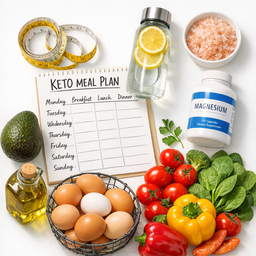
- Set aside 30 minutes every Sunday to plan your week. Write down breakfast, lunch, dinner, and snacks for each day.
- Prep ingredients in bulk: hard-boil a dozen eggs, cook a tray of chicken thighs, wash and chop vegetables.
- Keep emergency keto snacks in your bag, car, and desk drawer: macadamia nuts, beef jerky (sugar-free), cheese sticks, or a small packet of almond butter.
Beginner mistake: Planning elaborate gourmet keto meals that take 45 minutes to cook. You’ll do it for three days, get exhausted, and order pizza. Keep it simple.
Pro tip: The “repeat meal” strategy works wonders. Pick 2–3 breakfasts, 2–3 lunches, and 3–4 dinners you enjoy. Rotate them. You don’t need 21 unique meals per week. You need consistency.
Rule 8: Be Patient With Weight Loss
Keto is not a magic wand. It’s a metabolic tool that works — but on its own timeline.
Yes, many people lose 5–10 pounds in the first week. That’s mostly water weight, and it’s exciting. But after that initial drop, fat loss slows to a healthy 1–2 pounds per week. Some weeks, the scale won’t move at all. This is normal. This is healthy. This is how sustainable weight loss actually works.
Why it matters: Impatience is the #1 reason people quit keto right before it starts working. They hit a two-week plateau, panic, and binge on carbs. In reality, their body was recompositioning — losing fat and gaining muscle, or simply adjusting to a new metabolic state.
How to apply it:
- Weigh yourself once a week, same day, same time. Daily fluctuations are meaningless and psychologically damaging.
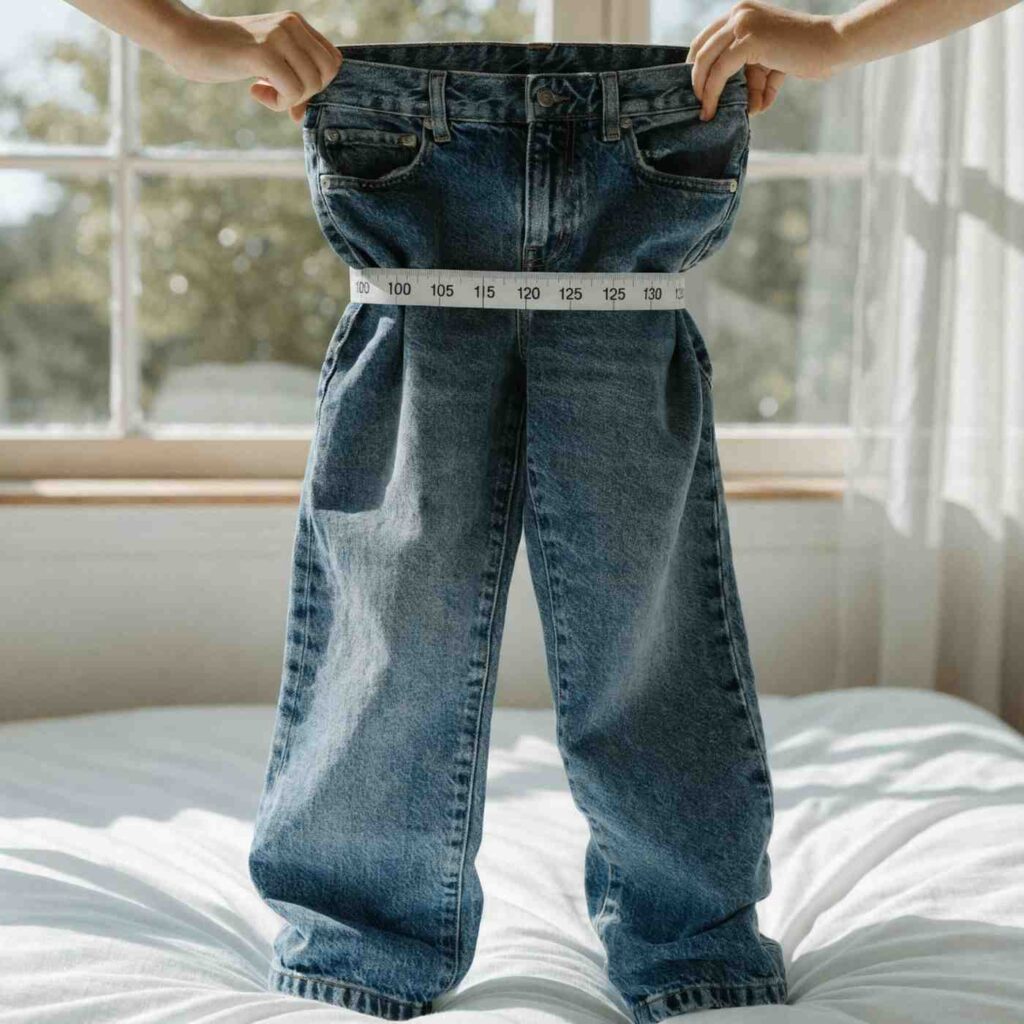
- Take progress photos and measurements. The scale lies; a tape measure doesn’t.
- Focus on non-scale victories: better sleep, clearer skin, more energy, looser clothes, stable moods.
Beginner mistake: Comparing your week 3 results to someone’s week 20 Instagram post. Everyone’s body is different. Your journey is your own.
Pro tip: If the scale hasn’t moved in 3+ weeks, audit your carb intake. You might be eating more carbs than you think. But most “plateaus” are just 4–7 days long. Breathe. Keep going.
Rule 9: Focus on Whole Foods
The best keto diet is built from foods that grew, swam, flew, or walked — not from a chemistry lab.
It’s technically possible to stay in ketosis eating nothing but pork rinds, sugar-free jello, and processed cheese. But you’ll feel terrible, your gut health will suffer, and you’ll miss out on the micronutrients that make keto truly transformative.
Why it matters: Whole foods provide vitamins, minerals, fiber, and phytonutrients that processed “keto junk” simply can’t match. They also keep you fuller longer, stabilize your blood sugar better, and support long-term health.
How to apply it:
- Build your plate around: leafy greens, non-starchy vegetables, quality meats, eggs, fish, nuts, seeds, avocado, and olive oil.
- Limit “keto-friendly” processed foods: low-carb bars, shakes, and snacks should be occasional conveniences, not daily staples.
- Shop the perimeter of the grocery store. The middle aisles are where the packaged, processed stuff lives.
Beginner mistake: Buying every “keto” product on the market — cookies, chips, pancakes, ice cream. These ultra-processed foods can fit your macros but often trigger cravings and digestive issues.
Pro tip: Apply the “grandma test”: Would your grandmother recognize this as food? If not, eat it sparingly.
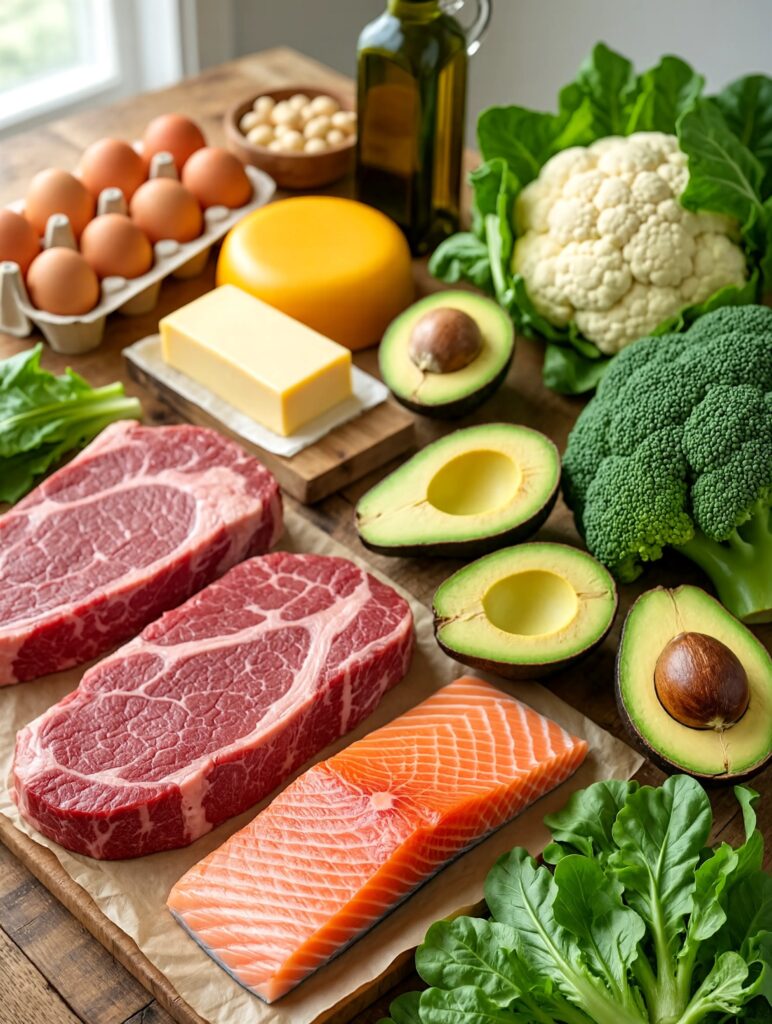
Foods You Should Eat on Keto
Here’s your go-to shopping list. Print it, screenshot it, or memorize it.
Proteins
- Beef (steak, ground beef, roasts)
- Pork (bacon, chops, shoulder)
- Chicken (thighs, wings, whole roasted)
- Turkey
- Lamb
- Fish (salmon, mackerel, sardines, tuna)
- Shellfish (shrimp, crab, lobster)
- Eggs (any style)
- Organ meats (liver, heart — incredibly nutrient-dense)
Healthy Fats
- Avocado and avocado oil
- Olive oil (extra virgin)
- Coconut oil and MCT oil
- Grass-fed butter and ghee
- Lard and tallow
- Macadamia nuts, pecans, walnuts
- Chia seeds, flaxseeds, hemp hearts
- Full-fat cheese, cream cheese, sour cream, heavy cream
Low-Carb Vegetables
- Leafy greens (spinach, kale, arugula, lettuce)
- Cruciferous veggies (broccoli, cauliflower, Brussels sprouts, cabbage)
- Asparagus
- Zucchini
- Bell peppers (in moderation)
- Cucumber
- Celery
- Mushrooms
- Green beans
Beverages
- Water (still and sparkling)
- Black coffee
- Unsweetened tea
- Bone broth
- Keto-friendly smoothies (made with spinach, avocado, protein powder, and unsweetened almond milk)
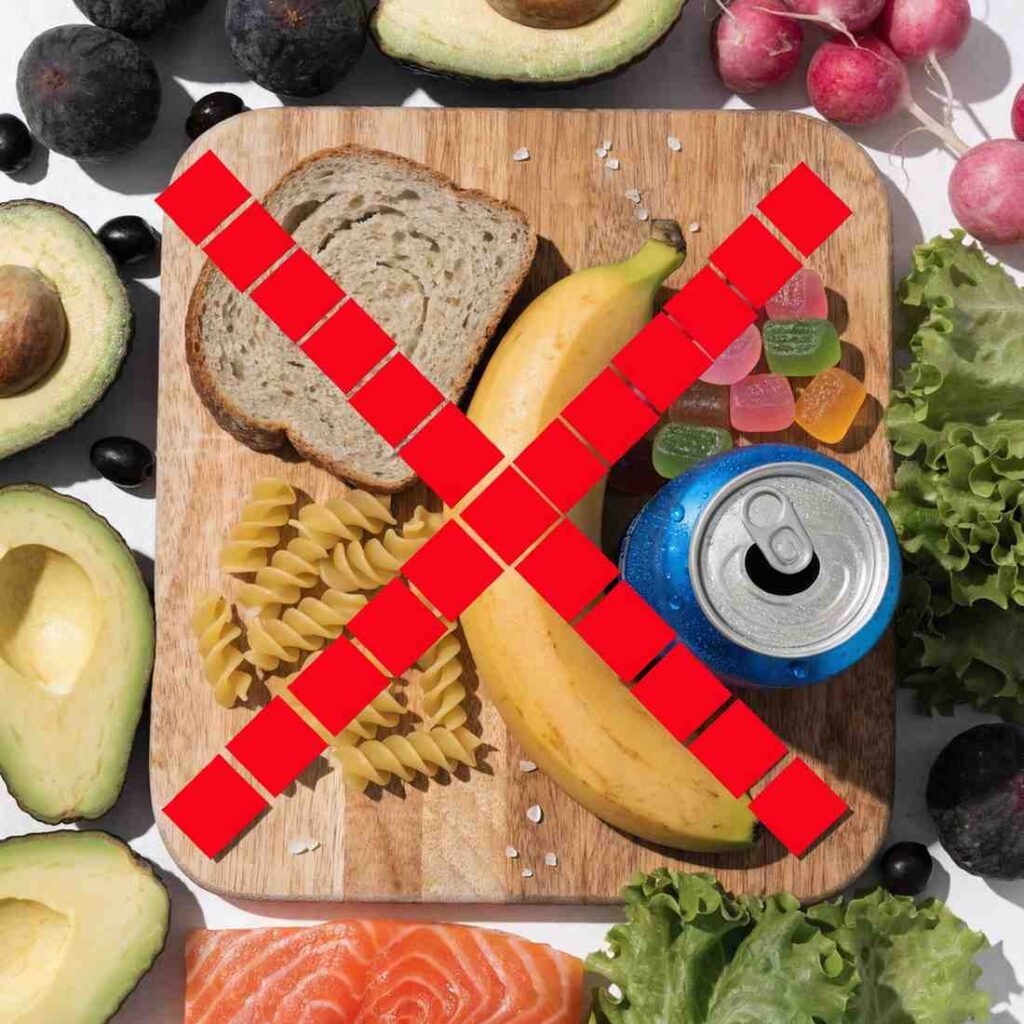
Foods to Avoid on Keto
These foods will kick you out of ketosis faster than you can say “carb coma.”
Grains and Starches
- Bread, bagels, muffins, croissants
- Pasta, noodles, ramen
- Rice, quinoa, oats
- Cereal, granola
- Crackers, chips, pretzels
- Pizza crust, tortillas, wraps
Sugary Foods
- Candy, chocolate bars, gummies
- Cookies, cakes, pastries, donuts
- Ice cream, frozen yogurt
- Soda, energy drinks, sweetened coffee drinks
- Fruit juice, smoothies with added sugar
- Honey, maple syrup, agave
High-Carb Fruits
- Bananas
- Apples
- Grapes
- Mangoes
- Pineapple
- Dried fruit
Keto-friendly fruit exceptions (eat in moderation): berries (strawberries, raspberries, blackberries), lemon, lime.
Starchy Vegetables
- Potatoes (all kinds)
- Sweet potatoes
- Corn
- Peas
- Butternut squash
- Parsnips
Legumes
- Beans (black, kidney, pinto, chickpeas)
- Lentils
- Peanuts (technically a legume — limit intake)
Processed “Low-Fat” Products
- Low-fat yogurt (loaded with sugar)
- Fat-free salad dressings
- Skim milk
- Margarine
- Most “diet” foods

Common Keto Mistakes Beginners Make
Even with the rules, beginners still slip up. Here are the most common traps — and how to avoid them.
Mistake #1: Not Eating Enough Fat
You can’t do low-carb and low-fat. Pick a lane. On keto, fat is your fuel source. Embrace it.
Mistake #2: Obsessing Over the Scale
Weight fluctuates daily based on water, salt, hormones, and digestion. Trust the process, not the number.
Mistake #3: Ignoring Electrolytes
The keto flu is optional. Salt your food, take magnesium, and drink your ketoade.
Mistake #4: Eating Too Much Protein
Wait — didn’t I say don’t fear protein? Yes. But some beginners go overboard, eating 300g of protein daily while barely touching fat. Balance matters.
Mistake #5: Snacking Constantly
Every time you eat, you spike insulin slightly. Keto reduces hunger — use that to your advantage and eat 2–3 solid meals instead of grazing all day.
Mistake #6: Comparing Yourself to Others
Your coworker lost 15 pounds in a month. You lost 5. So what? Your body, your timeline, your victory.
Mistake #7: Giving Up Too Soon
Most people quit in week 2 or 3 — right when their body is figuring things out. Commit to 30 days before you judge the results.
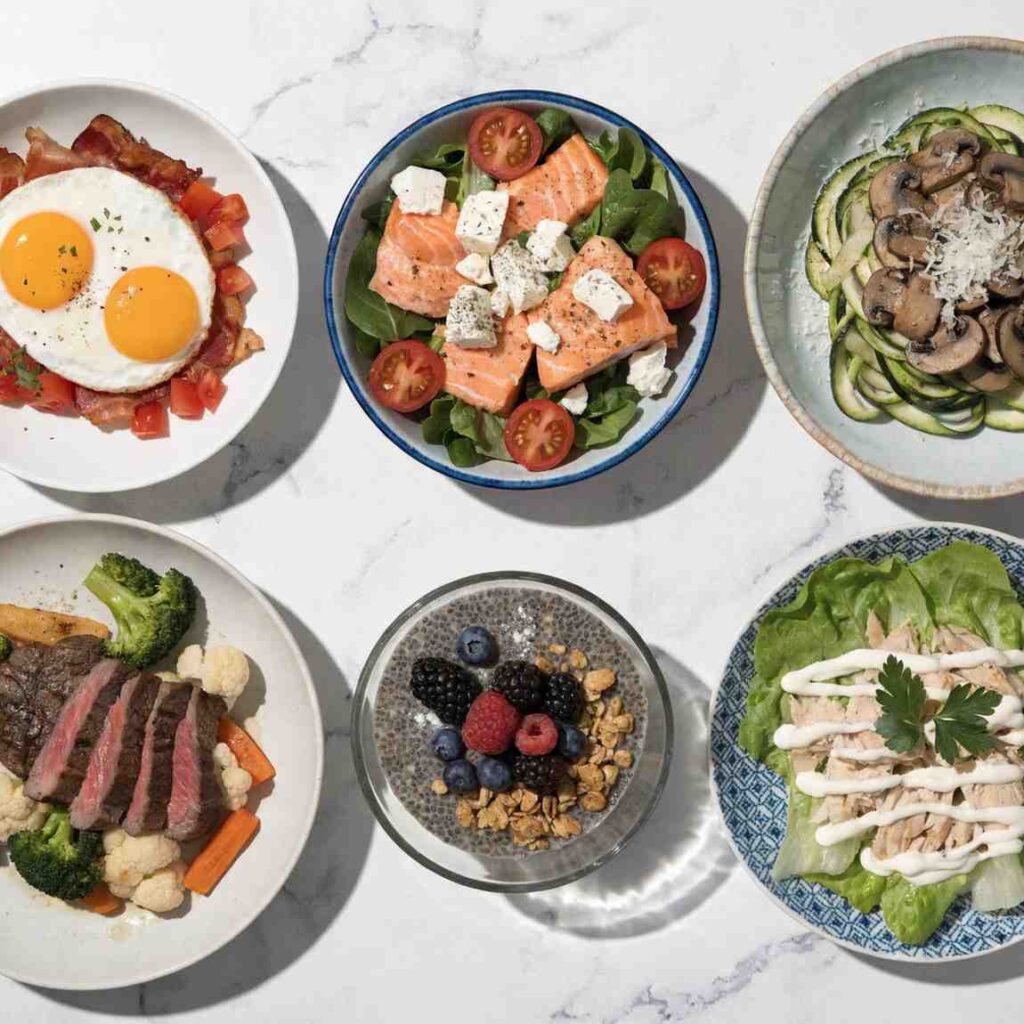
Beginner Keto Meal Ideas
Stuck on what to eat? Here are simple, delicious meals that check every box.
Breakfast Ideas
- Bacon & Eggs: 3 eggs fried in butter, 4 strips of bacon, half an avocado
- Keto Smoothie: Spinach, avocado, protein powder, unsweetened almond milk, chia seeds
- Veggie Omelet: 3-egg omelet with spinach, mushrooms, cheese, cooked in olive oil
- Chia Pudding: Chia seeds soaked overnight in coconut milk with vanilla and stevia
Lunch Ideas
- Chicken Salad: Grilled chicken thighs over mixed greens with olive oil dressing, olives, and feta
- Tuna Lettuce Wraps: Canned tuna mixed with mayo, celery, and lemon, wrapped in butter lettuce
- Cauliflower Rice Bowl: Cauliflower rice topped with ground beef, avocado, sour cream, and salsa
- Zucchini Noodle Alfredo: Zoodles tossed in a creamy parmesan sauce with grilled shrimp
Dinner Ideas
- Salmon & Asparagus: Pan-seared salmon fillet with roasted asparagus and garlic butter
- Steak & Broccoli: Ribeye steak with buttered broccoli and a side salad
- Keto Chili: Ground beef, diced tomatoes, bell peppers, and spices — no beans
- Stuffed Bell Peppers: Bell peppers filled with ground turkey, cauliflower rice, cheese, and marinara
Snack Ideas
- Handful of macadamia nuts or pecans
- Celery sticks with almond butter
- Hard-boiled eggs
- Cheese cubes or string cheese
- Beef jerky (sugar-free)
- Pork rinds with guacamole
Can Keto Help With Weight Loss?
Short answer: Yes. Long answer: Yes, but it’s not magic — it’s metabolic science.
Keto helps with weight loss through several powerful mechanisms:
1. Appetite Suppression
Ketones naturally reduce ghrelin (your hunger hormone) and increase cholecystokinin (a satiety hormone). Most people on keto spontaneously eat fewer calories without trying.
2. Stable Blood Sugar
By eliminating sugar and refined carbs, you avoid the blood sugar rollercoaster that triggers cravings and energy crashes. Stable blood sugar = stable willpower.
3. Fat-Burning Mode
In ketosis, your body becomes a fat-burning machine. It pulls energy from your diet and your fat stores. That’s the holy grail of weight loss: burning what you already have.
4. Reduced Insulin Levels
Carbs spike insulin, which is a storage hormone. Lower insulin levels make it easier for fat to be released from fat cells to be used as fuel.
5. Water Weight Loss
In the first 1–2 weeks, you’ll shed several pounds of water weight as your body depletes glycogen stores. It’s not fat, but it is motivating and reduces bloating.
The honest truth: Keto works best for people who struggle with hunger on traditional diets, have insulin resistance, or find it easier to eliminate carbs entirely rather than moderate them. It’s not the only way to lose weight, but for many people, it’s the easiest way.
Frequently Asked Questions
What are the most important keto rules?
The three non-negotiables are: keep carbs very low (under 50g net carbs), eat enough healthy fat (70–80% of calories), and stay on top of electrolytes (sodium, potassium, magnesium). Get these right, and everything else falls into place.
How many carbs should beginners eat on keto?
Most beginners should aim for 20–30 grams of net carbs per day for the first 2–4 weeks. This virtually guarantees ketosis and gives you the fastest results. After adaptation, some people can tolerate up to 50g while staying in ketosis.
What foods kick you out of ketosis?
The biggest culprits are grains, sugar, starchy vegetables, and most fruits. Even “healthy” foods like sweet potatoes, quinoa, bananas, and honey will shut down ketosis. Also watch for hidden carbs in sauces, dressings, and processed “low-carb” products.
Can I lose belly fat with keto?
Yes, keto can help reduce visceral (belly) fat, which is the dangerous fat stored around your organs. However, you cannot spot-reduce fat from one area. As your overall body fat percentage drops, belly fat decreases along with it. Many people notice their midsection shrinking first due to reduced bloating and water retention.
How long does it take to get into ketosis?
Most people enter ketosis within 2–4 days of eating under 20–50g of net carbs. Signs include increased thirst, a metallic taste in the mouth, more frequent urination, and reduced hunger. You can confirm ketosis using urine strips, a blood ketone meter, or by noticing the physical signs.
Can I drink alcohol on keto?
Pure spirits like vodka, gin, whiskey, and tequila contain zero carbs and are keto-friendly in moderation. Avoid beer (high in carbs), sweetened cocktails, and sugary mixers. Wine is moderate in carbs — limit to 1–2 glasses. Remember: alcohol pauses fat burning while your liver processes it.
Is keto safe long-term?
For most healthy adults, a well-formulated ketogenic diet is safe long-term. The key phrase is “well-formulated” — meaning plenty of vegetables, quality proteins, healthy fats, and adequate electrolytes. If you have pre-existing health conditions, consult your doctor before starting.
Do I need to exercise on keto?
Exercise accelerates results and improves overall health, but it’s not required for weight loss on keto. Many people lose significant weight without changing their activity level. That said, adding resistance training helps preserve muscle mass, which keeps your metabolism strong.
Conclusion: Your Keto Journey Starts Now
Here’s what I want you to remember: Keto is simple, but simple isn’t always easy.
The rules are straightforward. Keep carbs low. Eat enough fat. Don’t fear protein. Hydrate. Replace your electrolytes. Avoid hidden sugars. Plan ahead. Be patient. Focus on real food.
But living these rules day after day — especially when donuts appear in the break room, or your family orders pizza, or you’re too tired to cook — that’s where the real work happens.
The good news? You don’t need to be perfect. You just need to be consistent. One “off” meal doesn’t ruin your progress. One “perfect” day doesn’t guarantee success. It’s the accumulation of small, daily choices that creates transformation.
Sarah — the woman from our opening story? She learned these 9 rules, adjusted her approach, and three months later, she was down 22 pounds. More importantly, she had energy she hadn’t felt in years, her sugar cravings were gone, and she finally understood how to fuel her body instead of fighting it.
You can do this. The rules are in your hands now. Start with one meal. Then one day. Then one week. Before you know it, keto won’t be a “diet” — it’ll just be how you eat.
Ready to take the next step? Start by planning your first week of keto meals using the food lists and meal ideas above. Prep your electrolytes. Fill your water bottle. And remember: every expert was once a beginner who refused to quit.

Food lover and creator of BestCarbRecipes, sharing easy recipes, low-carb meal ideas, healthy cooking inspiration, calorie-friendly tips, and practical food guides to make everyday eating simpler, healthier, and more delicious.